

Reclaiming Play: Why Joy and Imagination Belong at the Heart of Learning
29 August, 2025

Author Dr Will Zoppellini
A child sits with legs tucked beneath them, scattered around are blocks, stuffed animals, cups, and other random objects. To the untrained eye, it’s an untidy sprawl of colours and textures. Yet, within the clutter, something remarkable is happening, a mind at work… testing, revising, solving, dreaming, all in rhythm. In this little act of play lies the seed of architecture, engineering, storytelling, and imagination.
Unfortunately, somewhere along the way, we were led to believe that learning only counts when it looks serious and orderly. Desks lined in rows. Hands folded. Knowledge transferred in neat, silent packages. Play was pushed aside and dismissed as a distraction, an enrichment activity, a luxury break. Something captivating in childhood but destined to be left behind.
This false divide between “serious learning” and “mere play” is one of education’s most damaging myths. Research has shown1,2, time and again, that this assumption is not only misleading, but developmentally inappropriate. When learning is stripped of joy and imagination, it becomes shallow, brittle, and disconnected from the child’s world
Table of Contents
In this post (the first of a series), we’ll explore why play is not the enemy of learning but its most powerful companion. We’ll consider how philosophers such as Vygotsky, Piaget, Bruner, and Froebel placed play at the very centre of growth, and how societal perceptions have reshaped, and often distorted, our classrooms. Most importantly, we’ll ask, How can we, as teachers, coaches, educators and parents, restore play to its rightful place in learning so that it inspires, empowers, and endures? The task before us is not to dwell on how we lost our way, but together, to reclaim play as the heart of education.
Grab your coffee, settle in, and let’s discover how learning can transform with play at its core.
Why Play Belongs at the Heart of Education
Defining play in relation to learning has long proven elusive, with scholars struggling to capture its richness in a single description. Researchers from a variety of fields related to education and learning have tried to classify play through categories3 with criteria4, or on a continuum5,6. Yet, several authors across the world remind us that play’s richness always escapes neat boxes6.
What unites these perspectives is the recognition that play is both deeply serious and profoundly meaningful7. It is how children absorb the world and reshape their thinking to understand it3, how they test ideas against the boundaries of reality8, and how they enter “imaginary situations” where ordinary objects gain extraordinary meanings9
Personally, I’m a romantic for the philosophical view of play, so I often return to Vygotsky’s idea9 that play is defined by the presence of an imaginary situation, where children change the meaning of actions and objects to give them a new sense. This concept is a fantasy, and perhaps one of the most extraordinary gifts of our species. Our capability to imagine something that isn’t real but still about the world is the foundation of invention, discovery, and creativity. It is the connection that links the imaginative world to some of humanity’s greatest achievements.
Four of the most influential philosophers in education all placed play as a foundational point in their theories, and this is no coincidence. Here’s a short overview:
Piaget saw play as central to cognitive development: through play, children incorporate new experiences, modify their thinking, and advance through developmental stages.
Bruner described play as the laboratory of the mind, a place where children try out ideas in low-risk conditions, learning the rules of culture and language.
Vygotsky argued that play is a “leading activity” in early childhood, creating zones of proximal development where higher mental functions: self-regulation, symbolic thought, problem-solving, are all nurtured.
Froebel the founder of kindergarten, saw play as the highest expression of human development in childhood. Allowing children to explore the patterns of nature, mathematics, and art through playful manipulation.
The connection between play and learning is summed up well by prominent researcher Ingrid Pramling Samuelsson, who argues that play and learning are inseparably tied in a child’s early life, and that learning does not stop once a lesson is over. The application of what is learnt continues constantly, woven into the child’s everyday experiences. Play as a pedagogy, or teaching approach, is therefore not a luxury. It is a systematic way of facilitating children’s learning through imaginative, creative, and social endeavours10. When play is respected, children are not passively receiving knowledge, but actively building it in collaboration with others and in dialogue with their environment7,1.
A play-based curriculum is not to be conceived as a curriculum that allows children to play now and then, but as a curriculum that basically takes playfully formatted cultural activities as contexts for learning. – Bert van Oers
The Myths and Mistakes That Pushed Play Aside
If play is so powerful, with clear benefits, surely we would be embracing it wholeheartedly? Sadly, no. Despite researchers and many educators being united on its value, several barriers still stand in the way. To understand why, we need to start with both history and perception.
Since the Industrial Revolution, schooling has been shaped less by the nature of learning than by the demands of society. Factories and offices required discipline, punctuality, and efficiency, not imagination. Classrooms were redesigned to mirror these needs including rows of desks, rigid schedules, and strict hierarchies12, all intended to produce compliant workers rather than creative thinkers.
That legacy persists. In modern systems, particularly in western contexts such as the U.K and U.S, the culture of standardised testing has pushed play even further to the margins1. When success is measured almost entirely by test scores, schools are pressured to prioritise direct instruction in literacy and numeracy, micromanaging children for the short-term gains, focusing on teaching ‘academic skills’ as early as possible13. This is all often at the expense of exploratory, playful learning14.
Societal perceptions add to the problem. Adults often dismiss play as “just fun” or “splashing around,” underestimating the cognitive complexity involved1,13,14. Play is seen as either trivial or indulgent. Author Neil Postman, in his book The Disappearance of Childhood15, argued that modern education has accelerated this process by eroding the imaginative space of childhood, demanding seriousness far too early.
Decades of research have shown that play is not the opposite of work, play and learning are interwoven, inseparable concepts16. Without play, many forms of thinking, cognitive development, language, and understanding would not be possible.
The Man Who Turned Toys into Tools
One of the most compelling examples of using play in education comes from Friedrich Froebel, the founder of kindergarten. He believed that children learn best through activity, exploration, and imaginative engagement. His invention of kindergarten, literally “children’s garden”, was revolutionary. It is a space where play formed the central vehicle for learning.
Froebel designed a series of “gifts”, artefacts that include wooden blocks, spheres, sticks, patterned tiles, and many others. As well as “occupations” such as weaving, folding, modelling, that encouraged children to discover patterns of geometry, design, and form. These were not toys, but carefully crafted tools to awaken perception and creativity. Froebel emphasised the educator’s role as an observer and guide, who, by carefully watching children play, could adjust the environment to support the child’s growing competencies, scaffolding their next steps in learning18.
The influence of his approach can be seen across science, architecture, engineering, art, and design. Here are a few powerful examples:
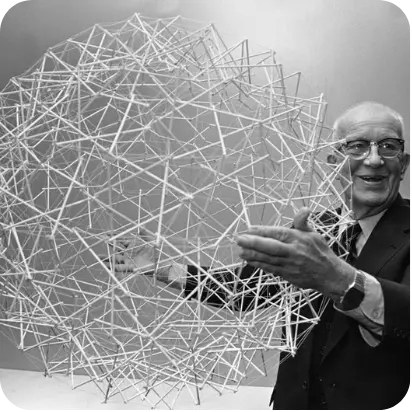
Architect Buckminster Fuller
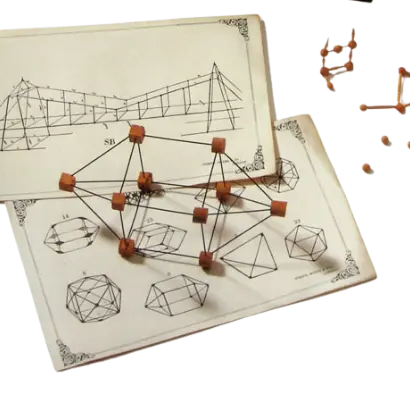
Credited his invention of the geodesic dome to playing with Froebel’s blocks as a child

Buckminster’s geodesic dome now used in architecture around the globe
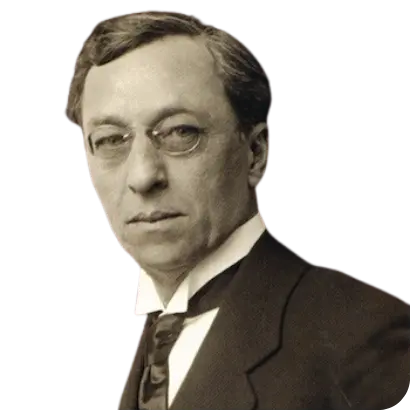
Artist Wassily Kandinsky
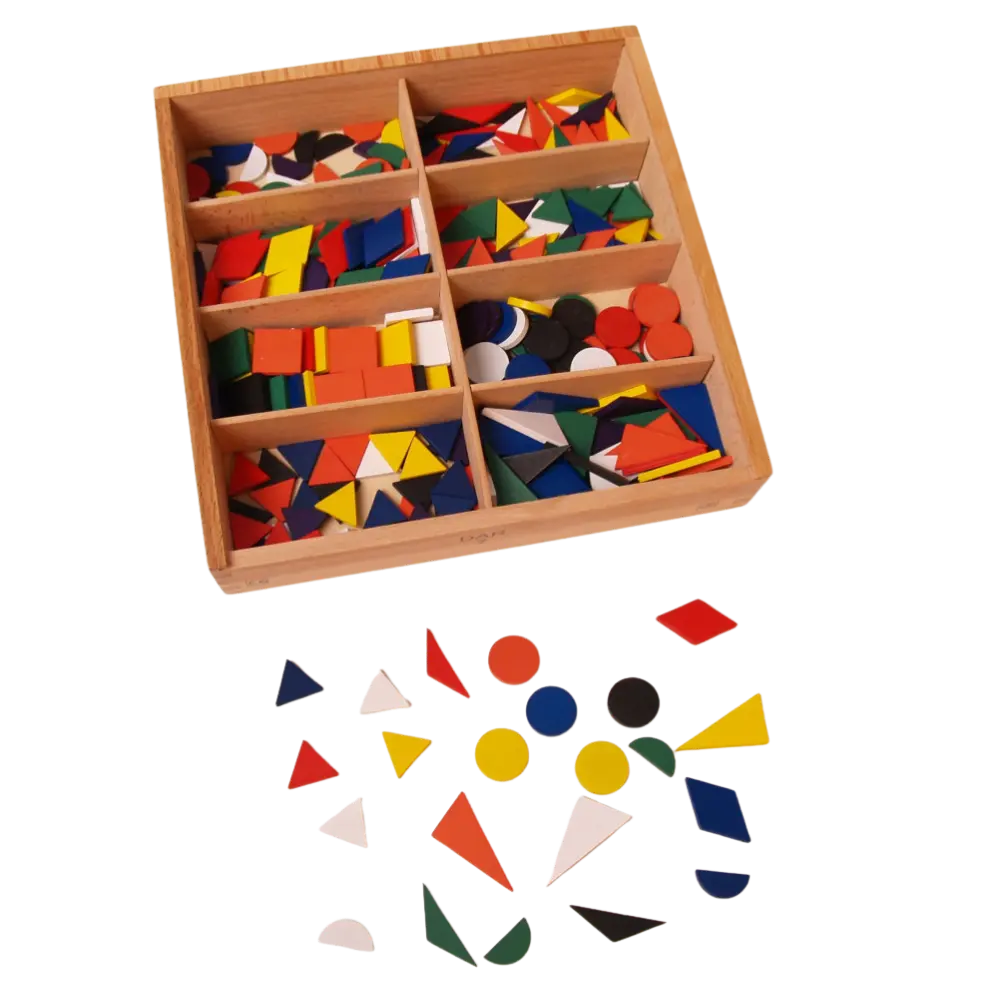
Abstract compositions echo the geometric shapes of Froebel’s gifts he played with
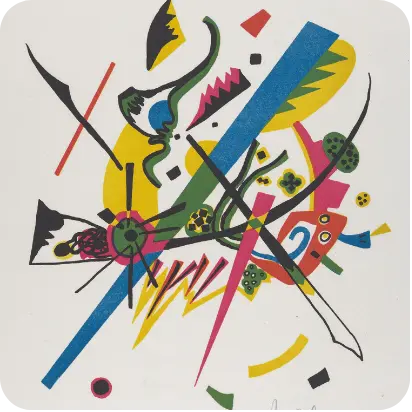
Kandinsky was known as a pioneer of abstract painting
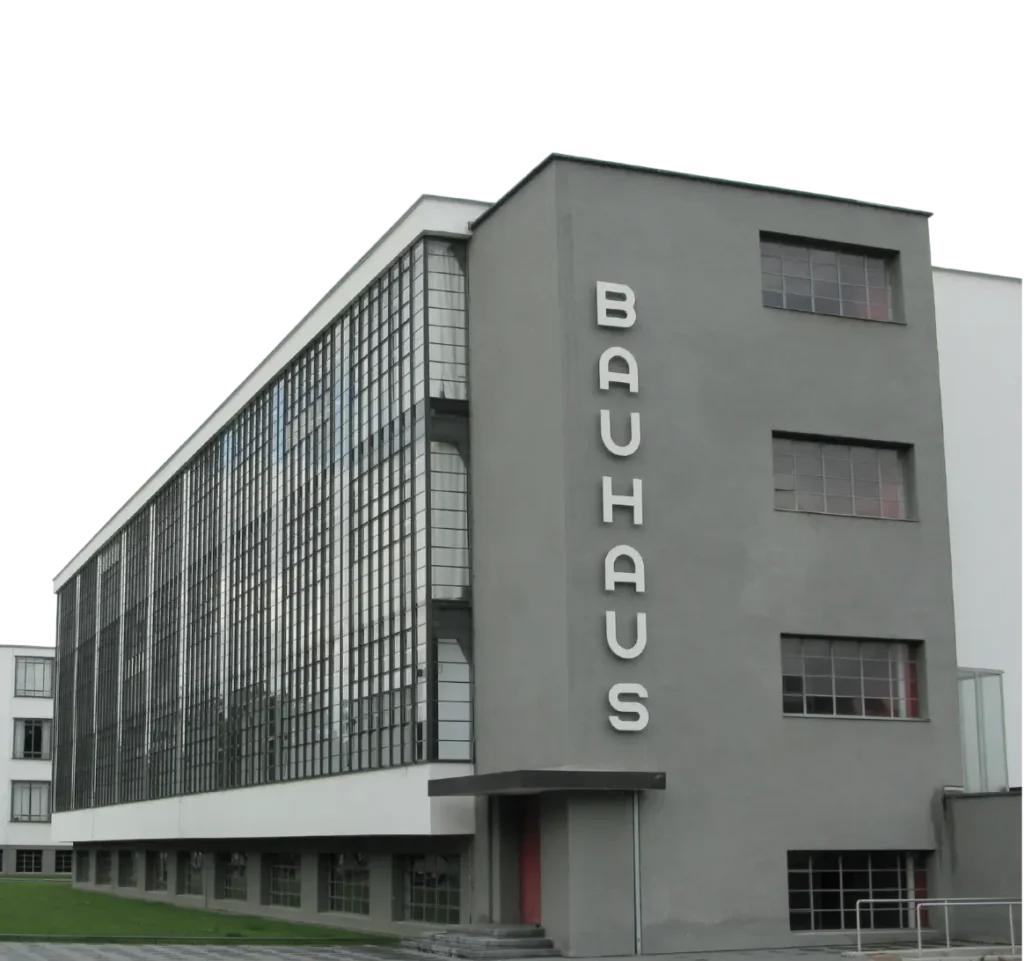
The Bauhaus design school
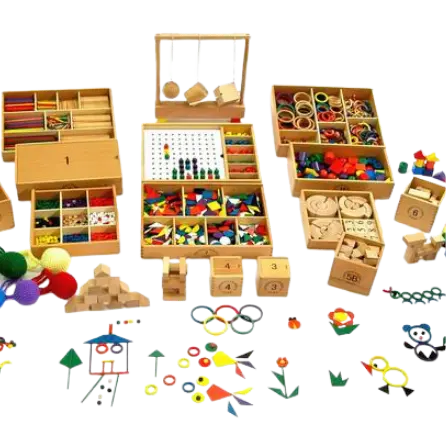
Drew inspiration from designers who attended Frobel schools
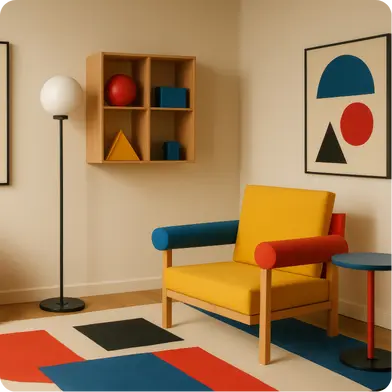
The Bauhaus movement revolutionised modern art, design & architecture
Evidence in Action: How Studies Show Play Works
There are many examples of applied studies in education that show the high-impact outcomes of play for learning. One such example comes from Ingrid Pramling’s classic study19 called “the shop.”. This long-term project explored how play could be used as part of everyday teaching practice with five- and six-year-olds.
Together with their teacher, they built a pretend supermarket in their preschool, stocked with packages brought from home. They played roles like cashier and delivery driver, while the teacher designed activities that linked their play to real-life experiences. For instance, the teacher guided children to notice packaging and advertisements, then later led discussions where the children shared what they observed about shops and adverts.
Through this combination of playful activity and reflective dialogue, the children made new connections between their everyday experiences and wider cultural concepts. The results were striking as children involved in the project (the experimental groups) developed a much deeper understanding of the key concepts (e.g advertising) than those not involved in the project (the control groups).
Another study by Deena Weisberg and colleagues17 found that guided play in science and math significantly improved children’s conceptual understanding compared to direct instruction from the teacher. These playful learning experiences were active, meaningful, socially interactive, and joyful.
Together, these studies highlight a critical point. When teachers step beyond the role of instructor and join as co-players and guides, play becomes a catalyst for deeper learning. In these moments, children connect ideas, build understanding, and create meaning in ways that traditional instruction rarely allows.
Why Child Agency Matters in Play-Based Learning
One of the most defining aspects of play is that the child’s perspective is viewed as central to the learning process20. For play to truly function as learning, it must be voluntary, child-led, and driven by the child’s own agency to choose.
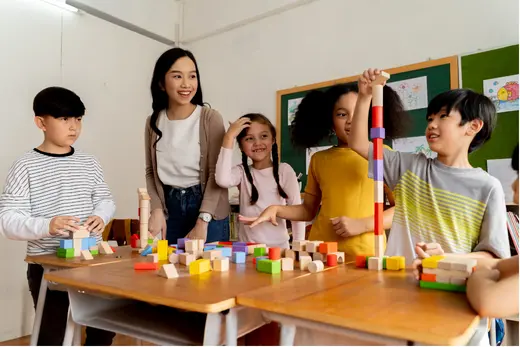
To highlight why this is such a meaningful factor of play, we can turn to another study from Ingrid Pramling21, who interviewed 300 children aged three to eight about what “learning” meant to them. Their answers revealed qualitatively different ways of understanding the concept, which also shifted with age. Crucially, the study showed that teachers were not always aware of the different ways children conceived of learning. In other words, children’s perspectives were not always visible to adults, even as they shaped how the child engaged with school.
In this light, play is not an “extra” activity but a vital arena for children to exercise agency. Concepts such as child-led and child-initiated play describe how children bring their own intentions and creativity into learning. Adults in these settings are not directors but partners, “parallel players,” mentors, or guides. Their role is to support without dominating, ensuring the child remains an active agent rather than a passive recipient.
When we recognise agency, we see play for what it truly is, a space where children take ownership of their learning, test their ideas, and grow in independence. It is not a retreat from education, but the most natural form of it.
Final thoughts

Over forty years of psychological research confirm that play is a necessity for healthy development22. Through play, children build cognitive flexibility, social competence, emotional resilience, physical skills, and knowledge of basic concepts.
In many of my posts I highlight that the world is fast-changing, with more uncertain challenges ahead. Play is one of the best ways to prepare children for that future. It develops the skills and mindsets that allow people to adapt, innovate, and persevere. It is through play that children learn to try, to fail, to try again, and to reimagine what is possible.
For us, this is the time to act and give children the best start in education. So perhaps the real question is not whether we can afford to give children time to play. It is whether we can afford not to.
Until next time, stay curious
Dr Will Zoppellini

References
- Pyle, A. and Danniels, E. 2017. A continuum of play-based learning: The role of the teacher in play-based pedagogy and the fear of hijacking play.Early education and development, 28(3), pp.274-289.
- Hirsh-Pasek, K., Golinkoff, R. M., Berk, L. E., & Singer, D. 2008. A mandate for playful learning in preschool: Applying the scientific evidence. Oxford University Press.
- Piaget, J., 1962.Plays, Dreams, Imitations. WW Norton.
- Smilansky, S. 1968. The effects of sociodramatic play on disadvantaged pre-school children. New York: John Wiley & Sons Ltd.
- Pellegrini, A.D. 1991. Applied child study (2nd ed.). New Jersey: Lawrence Erlbaum Associates, Inc. Miller, E. & Almon, J. 2009. Crisis in the kindergarten: Why children need to play in school. The Education Digest, 75, 42-45.
- Evaldsson, A.C. and Tellgren, B. 2009. ‘Don’t enter–It’s dangerous’: Negotiations for power and exclusion in pre-school girls’ play interactions.Educational and Child Psychology, 26(2), p.9.
- Pramling Samuelsson, I. and Björklund, C. 2023. The relation of play and learning empirically studied and conceptualised.International Journal of Early Years Education, 31(2), pp.309-323.
- Bruner, J., 1983. Play, thought, and language.Peabody journal of education, 60(3), pp.60-69.
- Vygotsky, L. 1978. Mind and society: The development of higher mental process. Cambridge, MA: Harvard University Press.
- Wood, E.A. 2014. Free choice and free play in early childhood education: Troubling the discourse.International journal of early years education, 22(1), pp.4-18.
- Van Oers, Bert. 2012. “Developmental Education: Foundations of Play-Based Curriculum.” In Developmental Education for Young Children. Concept, Practice and Implementation, edited by Bert van Oers, 13–25. Dordrecht: Springer.
- Hille, T. 2011.Modern schools: a century of design for education. John Wiley & Sons.
- Miller, E. & Almon, J. 2009. Crisis in the kindergarten: Why children need to play in school. The Education Digest, 75, 42-45.
- Bassok, D., Latham, S. and Rorem, A., 2016. Is kindergarten the new first grade?. AERA open,2(1)
- Postman, N. 1985. The disappearance of childhood.Childhood Education, 61(4), pp.286-293.
- Pramling Samuelsson, I., & Johansson, E. 2006. Play and learning–inseparable dimensions in preschool practice. Early Child Development and Care, 176(1), 47-65.
- Weisberg, D.S., Hirsh-Pasek, K., & Golinkoff, R.M. 2013. Guided play: Where curricular goals meet a playful pedagogy. Mind, Brain, and Education, 7(2), 104-112.
- Narayanappa, V. 2022.Educational Philosophy of Froebel. Ashok Yakkaldevi.
- Pramling, I. 1991. Learning about “the shop”: An approach to learning in preschool.Early Childhood Research Quarterly, 6(2), pp.151-166.
- Colliver, Y. and Fleer, M. 2016. ‘I already know what I learned’: young children’s perspectives on learning through play.Early Child Development and Care, 186(10), pp.1559-1570.
- Pramling, I., 1983. The Child’s Conception of Learning. Goteborg Studies in Educational Sciences 46. ACTA Universitatis Gothoburgensis
- Lillard, A. S., Lerner, M. D., Hopkins, E. J., Dore, R. A., Smith, E. D., & Palmquist, C. M. 2013. The impact of pretend play on children’s development: A review of the evidence. Psychological Bulletin,139, 1-34.