

Understanding Growth Mindset: A Guide for Teachers, Educators and Parents
18 June, 2025

Author Dr Will Zoppellini
Welcome to the first post in my six-part blog series on understanding and developing a growth mindset. Whether you’re completely new to the concept or already applying it with your students or children, this series is designed to deepen your understanding.
In this post, I’m going to define what a growth mindset is, why it matters in both education and parenting, how the concept has evolved from research, and offer some simple, practical steps for using it.
Grab your coffee, and let’s take first sip into a deeper understanding of the theory.
Table of Contents
What is a Growth Mindset?
Growth mindset is the belief that human qualities like intelligence, personality, and morality can be developed through effort, persistence, learning strategies, and guidance. In contrast, a fixed mindset assumes these qualities are innate and unchangeable, no matter what you do, you can’t improve1. The theory was originally developed by psychologist Dr. Carol Dweck, and along with her colleagues and many other researchers around the world, it has continued to expand and evolve.
Evidence from decades of research has shown that people with a growth mindset tend to embrace challenges, view effort as essential for progress, and see feedback as a tool for improvement. Those with a fixed mindset often avoid challenges, fear failure, and may see effort as a sign they’re not good enough.
Understanding the difference between these mindsets is important for educators and parents because the children who hold the different beliefs can have significantly different experiences in learning.
Why a Growth Mindset Matters?
Research across all levels of education has shown that whether a student holds a growth or fixed mindset can significantly shape their experience and their outcomes.
Students with a growth mindset are more likely to bounce back from failure, be motivated during challenges, and develop a genuine enjoyment of learning. They tend to be more resilient during tough transitions and often achieve more over time. This is not because they are necessarily “smarter”, but because they persist and adapt2,3.
In contrast, students with a fixed mindset may be more prone to giving up, experience more anxiety and stress, and feel overwhelmed during challenges3. They may see effort as a sign of weakness, rather than a step toward improvement, which can limit their potential.

Through my own research, I’ve worked closely with teachers in schools, universities, and educators in other settings to explore how these ideas can be applied in practice. What I’ve consistently observed is that when learning environments are designed to support a growth mindset, they create meaningful shifts in how both learners and educators approach challenges, persistence, and progress.
Over the last decade, I’ve noticed that some key aspects of growth mindset theory were sometimes misunderstood when educators tried to implement it. This was never due to neglect or a lack of care, but usually because there wasn’t enough time, in depth training, or resources provided for support. This meant that they weren’t always able to achieve the full benefits.
One of the quickest and most effective changes I’ve seen is simply taking the time to explain the foundational theory, where it comes from, and how to apply it in everyday practice. In the next sections, we’ll take a closer look and explore the deeper research of growth mindset.
Growth Mindset is an Implicit Theory
To begin, it’s important to clarify what growth mindset is, and what it isn’t. Growth mindset isn’t a theory of what intelligence is, but rather a belief that intelligence can be improved 2. It’s what psychologists call an implicit theory, a set of personal beliefs we hold, often unconsciously, about how the world works 4. The opposite, explicit theories, are formal scientific models about how intelligence works.
This distinction is key. When I ask educators, “Do you believe intelligence can improve?” the most common response is, “Well, what do you mean by intelligence?” And while that’s a valid question (and one I’ll explore in a future post), for the purpose of growth mindset, it doesn’t actually matter. What matters is your belief about whether intelligence can grow.
Implicit theories shape how we interpret experiences, especially around learning, effort, and failure. As Carol Dweck and David Yeager 5 explain:
They are called “implicit” because they are rarely made explicit, and they are called “theories” because, like a scientific theory, they create a framework for making predictions and judging the meaning of events in one’s world.
When growth mindset was first introduced, it was actually called the Implicit Theories of Intelligence 2. The two belief systems were known as the incremental theory (intelligence can grow) and the entity theory (intelligence is fixed). These were later renamed as growth mindset and fixed mindset when Dweck popularised the ideas in her 2006 book, Mindset: The New Psychology of Success.
The new terms also reflected the broader application of the theory to qualities beyond intelligence, like personality and morality.
How Growth Mindset Evolved from Research
Growth mindset didn’t appear overnight. Decades ago, Carol Dweck and her colleagues began exploring why children of similar academic ability reacted so differently to failure in school 6, 7. For example, after failing a test, why would one child give up and blame external factors, while another would try harder and reflect on how to improve?
Their research identified two core responses to failure:
The Helpless Response
The child disengages, believing the outcome is out of their control.
The Mastery Response
The child becomes more engaged, increases effort, and focuses on learning strategies.
These goals helped explain the helpless vs. mastery responses. Students with performance goals feared failure because it threatened their self-image. Those with learning goals saw failure as part of growth, it meant they could discover their mistakes.
This eventually led to the development of growth & fixed mindset 11, 12. The research concluded that children holding learning goals believed their abilities could be changed, vs children with performance goals believed their abilities were fixed.
Dweck and her team eventually proposed that these various beliefs about effort, motivation, goals, and intelligence are not separate. Instead, they operate together as a meaning system 3, 13 rooted in whether a person believes their abilities can change.
In this system:
Performance goals
Focus on proving ability and maintaining positive judgements.
Learning goals
Focused on improving ability and mastering new tasks.
These goals helped explain the helpless vs. mastery responses. Students with performance goals feared failure because it threatened their self-image. Those with learning goals saw failure as part of growth, it meant they could discover their mistakes.
This eventually led to the development of growth & fixed mindset 11, 12. The research concluded that children holding learning goals believed their abilities could be changed, vs children with performance goals believed their abilities were fixed.
Dweck and her team eventually proposed that these various beliefs about effort, motivation, goals, and intelligence are not separate. Instead, they operate together as a meaning system 3, 13 rooted in whether a person believes their abilities can change.
In this system:
Fixed mindset
Aligns with performance goals and challenge avoidance. Effort may be seen as a sign of low ability.
Growth Mindset
Supports learning goals, where effort is a path to improvement and setbacks are seen as part of the process.
Decades of research now support the idea that a student’s mindset, particularly their belief about the malleability of human qualities like intelligence, shapes their motivation, resilience, and academic achievement 14,15,16.
To truly develop a growth mindset, all of these areas need to be addressed, because together, they form a powerful meaning system that influences cognitive processes and long-term development. It is not about being positive all the time or just praising effort.

Growth mindset is a deeper, interconnected system of beliefs about effort, achievement, goal setting, attribution, and the nature of ability. These elements work together to shape how a child thinks, learns, and responds to challenges.
Can Mindsets Be Altered or Developed?
Absolutely, a growth mindset can be developed, especially in children. Research has shown that it’s possible to shift a child’s mindset through simple, targeted interventions.
In one study10, young children read short passages containing either growth or fixed mindset messages. Those who read the growth mindset passage were significantly more likely to adopt learning goals in the tasks that followed, while those exposed to the fixed mindset message leaned toward performance goals instead.

Further studies over many different contexts have reinforced this idea 5,14,23, showing that mindsets can be influenced through persuasive writing, classroom interventions, feedback and praise (see my post on feedback and praise).
This means teachers, parents, and educators can play a key role in helping children develop a growth mindset, guiding them toward the benefits it brings.
Don’t Be Afraid of A fixed mindset - It Isn’t Evil
Fixed mindsets are not something to be feared. It’s a natural part of learning, and every child will experience it at times. Just like adults, children may not immediately respond to a failure with excitement, saying things like, “Oh, I made a mistake! Time to change my strategy and put in more effort!”
In reality, most children will initially feel discouraged and frustrated, or even think of themselves as failures when they encounter a setback. That’s normal! However, this doesn’t mean they’re locked into a fixed mindset forever 3.
After a fixed mindset response, the key is to guide children back toward a growth mindset through reflection and encouragement.
For example, you can help them see the value in their mistakes and show them how effort and perseverance can lead to improvement. Over time, these reactions can become more fluid, and they become better at recognising when they are slipping into a fixed mindset.
If a child is showing a fixed mindset response, it’s essential to avoid the temptation to label them as having a “fixed mindset” that they cannot change. This would be an example of fixed mindset thinking about mindset itself! Instead, see it as part of a process.
Remember, growth mindset isn’t something you either have or don’t have it’s a dynamic process that can be nurtured and strengthened over time.
How Growth Mindset Are Shaped:
Teachers, educators, and parents can help shape a growth mindset by:
Encourage goals that prioritise mastering new concepts and skills rather than chasing grades or external rewards.

Highlight effort, persistence, and the value of learning from mistakes.

Break down progress into manageable steps that show how small, consistent effort leads to visible improvement.

Break down progress into manageable steps that show how small, consistent effort leads to visible improvement.
Emphasise that qualities like intelligence can be developed with time, practice, and learning strategies.

Use examples of individuals who achieved success by embracing failure and valuing the process.
These approaches create an environment where growth is celebrated, mistakes are viewed as learning tools, and children feel supported in their development.
Final Thoughts

Just like a strong coffee, understanding mindset takes time to brew, but once it does, it energises everything that follows. As you deepen your understanding and attempt to use this more, remember that you will likely make mistakes and apply it incorrectly at times, so be patient, reflect, and persevere.
Until next time, stay curious
Dr. Will Zoppellini

Suggested Book: Mindset - Changing The Way You think To Fulfil Your Potential
This is essential reading for any educator. Dweck’s work helps us see how the language we use and the feedback we give can either limit students or help them develop a lifelong love of learning.
This is an affiliate link, if you buy through it I may receive a small commission at no extra cost to you. This helps support my work.
Another cup of theory? discover more...


Beyond the posters: how schools, education and sport organisations can build environments for growth mindset
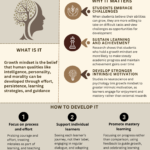
Download the practical strategies from this post as a free printable infographic
*By signing up, you agree to receive emails from Coffee & Theory. You can unsubscribe at any time.

References
- DWECK, C. S. 2008. Achievement in Math and Science. Journal of Educational Psychology, 96(1), 97-109
- DWECK, C.S. 2000. Self-theories. New York, NY: Psychology Press
- DWECK, C.S., and YEAGER, D.S. 2019. Mindsets: a view from two eras. Psychol. Sci. 14, 481–496
- STERNBERG, R. J., CONWAY, B. E., KETRON, J. L., BERNSTEIN, M. 1981. People’s conceptions of intelligence. Journal of Personality and Social Psychology, 41(1), 37-55.
- YEAGER, D.S., and DWECK, C. S. 2012. Mindsets That Promote Resilience: When Students Believe That Personal Characteristics Can Be Developed. Educational Psychologist, 47(4), 302-314
- DIENER, C.I., and DWECK, C.S. 1978. An analysis of learned helplessness: Continuous changes in performance, strategy, and achievement cognitions following failure. Journal of Personality and Social Psychology, 36(5), 451-462
- DIENER, C.I., and DWECK, C.S. 1980. An analysis of learned helplessness: II. The processing of success. Journal of Personality and Social Psychology, 39(5), 940-952
- M., and DWECK. C.S. 1986. The relationship of conceptions of intelligence and achievement goals to achievement-related cognition, affect, and behaviour. Unpublished manuscript, Harvard University.
- NICHOLLS, J.G., 1984. Achievement motivation: Conceptions of ability, subjective experience, task choice, and performance. Psychological Review, 91(3), 328-346
- DWECK, C.S., LEGGETT, E. L. 1988. A social-cognitive approach to motivation and personality. Psychological Review, 95, 256-273
- DWECK, C. S., and ELLIOTT, E. S. 1983. Achievement motivation. In E. M. Hetherington (Ed.), Socialization, personality, and social development. 643-691). New York: Wiley.
- ELLIOTT, E.S., and DWECK, C.S. 1988. Goals: An Approach to Motivation and Achievement. Journal of Personality and Social Psychology, 54(1), 5-12
- MOLDEN, D.C., and DWECK, C.S. 2006. Finding “Meaning” in Psychology. American Psychologist, 61(3), 192-203
- BLACKWELL, L.S., TRZESNIEWSKI, K.H., DWECK, C. S. 2007. Implicit Theories of Intelligence Predict Achievement Across an Adolescent Transition: A Longitudinal Study and an Intervention. Child Development, 78(1), 246-263
- BOALER, J. 2013. Ability and mathematics: The mindset revolution that is reshaping education. Forum, 55, 143–152.
- BURNETTE, J.L., O’BOYLE, E. H., VAN EPPS. E. M., POLLACK. J. M., and FINKEL. E. J., Mind-sets matter: A meta-analytic review of implicit theories and self-regulation. Psychological bulletin, 139(3), 655-701
- YEAGER, D.S., ROMERO, C., PAUNESKU, D, HULLEMAN C.S., SCHNEIDER, B., HINOJOSA C., DWECK, C.S. 2016. Using design thinking to improve psychological interventions: The case of the growth mindset during the transition to high school. Journal of Educational Psychology, 108, 374–391