
Play and the Brain: Why Fun is Fundamental for Cognitive Development
12 September, 2025

Author Dr Will Zoppellini
Neuroscience, behavioural science, and developmental psychology all indicate that the brain thrives when learning is active, creates a meaningful experience and incites joy. Play-based learning drives these processes, strengthening pathways for development in language, cognition, reasoning, motor skills, and more.
We see these instances every day, like a child kneeling in the garden, scooping mud into a cup and declaring it a potion, or fidgeting with magnetic tiles, piecing together a machine that exists only in their imagination. This play is anything but meaningless. Inside their brain, synapses are firing at extraordinary speeds, allowing millions of connections to form. These are increasing the child’s capability in memory, attention, problem-solving, and movement through an intertwined living network.
Sadly, so many education systems are stripping away these joyful beginnings, replacing them with rigid instruction and narrow measures of success. In this post, part of my series on play-based learning, I’ll show how rigorous research demonstrates that play is not a distraction but a foundation for holistic child development and lifelong learning.
I’ll explore how play shapes cognitive growth, and present research from the neuroscience of learning, uncovering how play influences emotion, memory, executive functions, and empathy. I’ll end with strategies to help you create conditions where children flourish.
Grab your coffee, and let’s explore why joy is the catalyst for learning.
Table of Contents
How Learning Works in the Brain
I want to be clear that when I write about learning, I don’t see it as facts being stored like books on a shelf, or a performance on a test. I understand learning as a dynamic, interconnected process where different regions of the brain communicate and rewire in response to experience1. It is the brain’s capacity to process and respond to sensory input from the world2.
Learning experiences that are meaningful provide a variety of input such as sights, sounds, emotions, and actions. The brain then weaves these into networks that support memory, reasoning, language, and problem-solving. In a child’s early life, for example, a face-to-face exchange with a caregiver delivers multiple forms of input at once, such as facial expressions (visual), tone and words (auditory), and feelings of safety and attachment (emotional).
It is crucial to understand that no part of the brain develops in isolation2. Each region depends on continual input from the environment and connects with other systems to strengthen or adapt3. Play-based learning exemplifies this more than other pedagogical approaches4. A single playful activity draws on multiple domains at once including motor skills, attention, memory, language, and social reasoning5. This is vital because during childhood development is interconnected, for example, physical development of fine and gross motor skills links directly with language, social understanding, and emotional regulation. This integration shows why play is such a catalyst for growth.
This neuroscientific view echoes Lev Vygotsky’s insights almost a century ago. He argued that learning is inherently social, unfolding through guided interactions with more knowledgeable others. His “Zone of Proximal Development” (the space between what a child can do alone and what they can achieve with support) finds striking resonance in today’s research. Responsive, playful exchanges don’t just scaffold skills, they literally shape the brain.
It’s important to recognise that research at the intersection of play, learning, and neuroscience is still evolving. Some of our current understandings come from adult studies, even though children’s brains are more sensitive to environmental input6. Others draw on animal models which, while not perfect, offer strong parallels. We need these models because, for example, direct experiments with children to observe the impact of withholding play would be unethical. The good news is that funding and research interest is growing in this area. Additionally, non-invasive brain imaging technologies are emerging rapidly, offering deeper insights.
What we can say with confidence is that play creates conditions where children engage actively, find meaning, and experience joy. These are the conditions in which the brain learns best.

The Neuroscience of Play-based Learning
One of the strengths of play is that it allows emotions to be a factor in the learning process. For a long time, emotions were treated as secondary to cognition in learning, as if feelings were distractions that pulled us away from “serious thinking.” Thankfully, modern neuroscience shows the opposite, that emotion and cognition are inseparable7. Joy, curiosity, frustration, even surprise are not interruptions to thought but the fuel that powers it. These emotions steer decisions and help children navigate uncertainty, take risks, and adapt to new challenges.
At the heart of this system is dopamine, a neurotransmitter that shapes how we experience reward, pleasure, and motivation8. When children encounter something new and exciting, dopamine levels rise, lighting up regions of the brain involved in attention, memory, and action (including the hippocampus, prefrontal cortex, and striatum). In education settings, this response translates into increased intrinsic motivation and primes the brain for deeper learning6.
Studies have revealed that when learners anticipate a positive outcome or are intrinsically motivated, activity in these neural reward circuits increases, making it easier to retain and recall information9. This is why children immersed in a playful activity often seem to remember and apply what they learned long after the lesson is over.
Dopamine also supports the process of brain plasticity, the ability of the brain to adapt to new input. Joyful and meaningful experiences leave chemical traces that help the brain rewire, strengthening pathways for future learning10. Play, with its blend of novelty, challenge, and pleasure, provides precisely the kind of environment that keeps the brain flexible and open to growth.
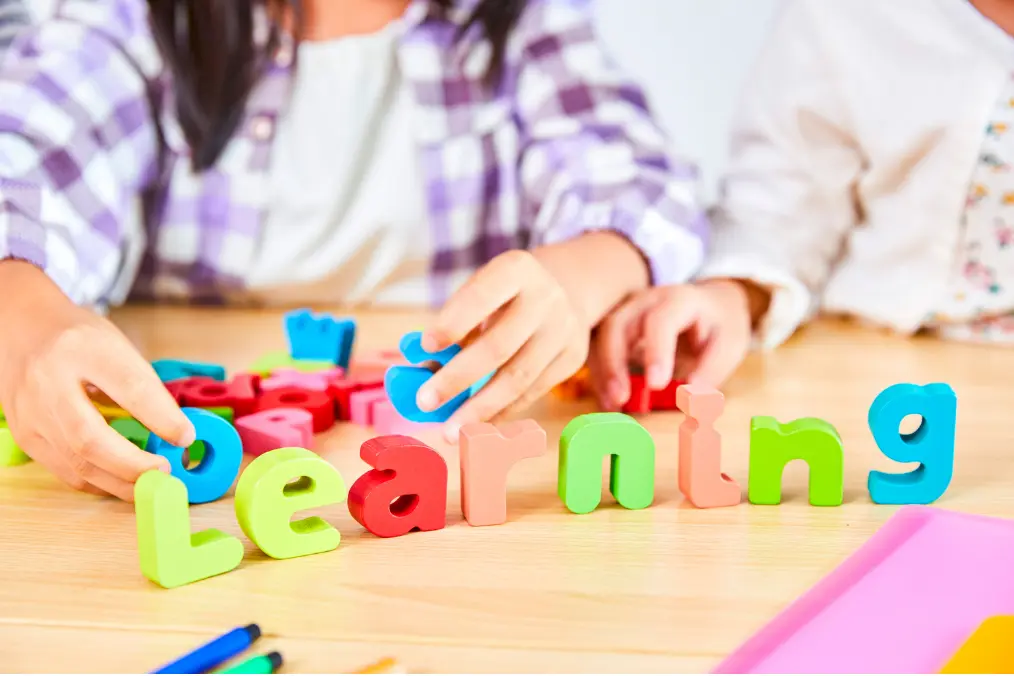
Playful situations also promote higher-order thinking, such as analogical reasoning. This is the ability to see connections between seemingly different things11, such as recognising that honey from a bee is like milk from a cow, or spotting triangles hidden in rooftops and road signs. Play naturally encourages this kind of reasoning, helping children connect what they already know with new ideas, bridging the familiar and the unknown.
Why Active Engagement & Agency Matter in Learning
Neuroscience tells us that the brain learns best not when children are passive observers, but when they are active participants who are curious, immersed, and choosing their own paths forward. Play-based learning demands active involvement. A child who is role-playing as a shopkeeper isn’t just watching someone else count coins, they are the one weighing, deciding, experimenting, and adapting.
Psychologist Mihaly Csikszentmihalyi12 described this deep state of engagement as flow, a condition where time seems to disappear because attention is fully absorbed. We’ve all experienced moments like this, when the challenge is just right, when frustration hasn’t tipped into defeat, when the activity feels both meaningful and energising. Play is one of the richest environments for children to find that balance.
A child’s active engagement is driven by their agency – the child’s sense of control over their learning. Research from developmental psychology, behavioural science and neuroscience all show that when children feel ownership, neural networks linked to motivation, decision-making, and memory are activated13. Agency creates a positive cycle because the more children feel in control, the more motivated they are to continue, which also reinforces confidence and builds resilience14.

When children are actively engaged in play and feel ownership of their actions, the effects ripple outward. One of the most striking outcomes is the development of executive functions. These are the core skills of working memory, inhibitory control, and cognitive flexibility that help us focus, switch between tasks, and regulate our impulses15. Play strengthens these capacities because it creates situations where children must juggle rules, manage turn-taking, adapt strategies, and sustain attention over time.
Consider, for example, a game of “pretend restaurant.” The child taking orders has to remember multiple requests (working memory), resist the temptation to eat the play pizza themselves (inhibitory control), and adapt when a customer suddenly changes their mind (cognitive flexibility). These aren’t trivial acts but rehearsal for the same executive skills that underpin academic success and social competence. When children are allowed to stay deeply engaged, without constant adult interruption, they develop the capacity to sustain attention and regulate themselves more effectively.
Play & The Development of Emotional Intelligence
Play-based learning is not only a catalyst for cognitive development, it is also one of the most effective ways to nurture emotional intelligence and emotional regulation. These qualities are often at the root of what educators describe as “readiness to learn.” A child may recognise letters or numbers, but without the ability to manage frustration, stay engaged, or cooperate with peers, progress is fragile and limited5.
Through play, children practice these skills in natural, meaningful contexts. In socio-dramatic play, a child might ask, “How does my character feel?” In doing so, they practise empathy and perspective-taking. Rather than receiving abstract lessons about “sharing” or “being kind,” children live the experience through cooperation, negotiation, and imaginative problem-solving. In this way, play becomes a kind of social laboratory, where executive functions and emotional intelligence develop side by side1,15.
Adults play a vital role here. By modelling calm responses, asking reflective questions (“How do you think she feels?”), or guiding conflict resolution, teachers and parents provide tools to navigate emotions. As children observe and imitate these behaviours, they internalise strategies for managing their own feelings and for understanding the emotions of others.
Strategies to Apply Play-Based Neuroscience
*Flip the tiles to discover the strategies
Create Free-Choice Play Time
protect deep play
Follow the Child’s Lead
Use Make-Believe for Real Learning
balance guidance with freedom
Design Joyful, Multi-Sensory Experiences
Final Thoughts

When children are actively engaged in learning that is meaningful and joyful the effects reach far beyond the lesson itself. Their brains form stronger networks for memory, sharpened attention, and flexible problem-solving, laying the groundwork for deep and lasting learning.
When children are free to explore, choose, and create through play, they don’t just acquire knowledge, they learn how to think, adapt, and flourish. Take that freedom away, and we weaken the very foundations of learning and the ability to transfer knowledge across domains.
Expanding play-based approaches throughout childhood, especially in educational settings, isn’t optional. It is essential if we want to prepare children to succeed and thrive in life.
Until next time, stay curious,
Dr Will Zoppellini


References
- Nelson, E. E. 2017. Learning through the ages: How the brain adapts to the social world across development. Cognitive Development.
- Fox, S. E., Levitt, P., & Nelson, C. A. 2010. How the timing and quality of early experiences influence the development of brain architecture. Child Development, 81(1), 28-40.
- Hensch, T. K. 2016. The power of the infant brain. Scientific American, 314(2), 64-69.
- Pellis, S. M., Pellis, V. C., & Himmler, B. T. 2014. How play makes for a more adaptable brain: A comparative and neural perspective. American Journal of Play, 7(1), 73-98.
- Whitebread, D., Coltman, P., Jameson, H. and Lander, R., 2009. Play, cognition and self-regulation: What exactly are children learning when they learn through play?.Educational and Child Psychology, 26(2), p.40
- Liu, C., Solis, S.L., Jensen, H., Hopkins, E., Neale, D., Zosh, J., Pasek, K.H. and Whitebread, D. 2017.Neuroscience and learning through play: a review of the evidence.
- Immordino-Yang, M., & Damasio, A. 2007. We feel, therefore we learn: The relevance of affective and social neuroscience to education. Mind, Brain, and Education, 1(1), 3-10.
- Cools, R., 2011. Dopaminergic control of the striatum for high-level cognition.Current opinion in neurobiology, 21(3), pp.402-407.
- Bromberg-Martin, E.S. and Hikosaka, O., 2009. Midbrain dopamine neurons signal preference for advance information about upcoming rewards.Neuron, 63(1), pp.119-126.
- Söderqvist, S., Nutley, S.B., Peyrard-Janvid, M., Matsson, H., Humphreys, K., Kere, J. and Klingberg, T. 2012. Dopamine, working memory, and training induced plasticity: implications for developmental research.Developmental psychology, 48(3), p.836.
- Hobeika, L., Diard‐Detoeuf, C., Garcin, B., Levy, R. and Volle, E., 2016. General and specialized brain correlates for analogical reasoning: A meta‐analysis of functional imaging studies.Human brain mapping, 37(5), pp.1953-1969.
- Csikszentmihalyi, M. 1975. Beyond boredom and anxiety (1st ed. ed.). San Francisco:
- Kuhn, S., Brass, M., & Haggard, P. (2013). Feeling in control: Neural correlates of experience of agency. Cortex, 49(7), 1935-1942. doi:10.1016/j. cortex.2012.09.002
- Kaiser, S., Simon, J., Kalis, A., Schweizer, T. S., Tobler, P. N., & Mojzisch, A. (2013). The cognitive and neural basis of option generation and subsequent choice. Cognitive, Affective and Behavioral Neuroscience, 13, 814-829.
- Diamond, A. 2013. Executive functions. Annual Review of Psychology, 64, 135.