

The gifted myth: Rethinking potential in classrooms and playing fields
15 February, 2026

Author Dr Will Zoppellini
Picture a classroom at the end of the day. The floor scattered with the remnants of learning, a few pencil shavings, half-erased number lines, a forgotten glue stick with the lid missing. The room has that familiar late-afternoon silence, the children are tired, teachers moving with that calm efficiency that comes from doing this a thousand times.
Suddenly, a teacher leans slightly toward you, nods in the direction of a boy sitting near the window, and whispers “He’s one of our gifted ones”.
The boy is quiet and confident in the way some children are when school feels like home. He comfortably moves through the task like it belongs to him. Then, you see it, a wristband style label, the sort schools sometimes use for groups and interventions, with a word printed on it… GIFTED.
It sits on his wrist as if it were simply a fact, as if it has always been true, as if the story of who he is has already been decided. Across the room, another child is working too, but her learning looks different.
Table of Contents
She’s bent over her page, not in neat progress, but in exploration. The pencil marks are messy, arrows drawn everywhere, and parts scratched out as if she has started over four times. The doodling in the margins are little diagrams that make sense to her but don’t look like the task on the board. Every so often she pauses, stares into space, then returns to the page as if she’s trying to solve something bigger.
To an untrained eye, or perhaps just a busy one, she looks like she’s struggling, distracted, or doing it wrong. No one whispers about her.
We are remarkably quick to recognise brilliance when it arrives wearing the uniform of school success. We are far slower to notice it when it comes in the shape of uncertainty, experimentation, and slow, uneven progress.
Identifying students as academically or athletically “gifted” is a relatively widespread practice across many education systems. Gifted registers and programs promise excellence. Yet the more closely we examine the concept through history, psychology, and child development, the more fragile it becomes.
In this post I explore the provocative idea that “gifted children,” as we commonly define them in education and sport, may not exist in the way we think they do. That giftedness is historically constructed, conceptually unstable, developmentally fluid, and often misidentified. By clinging to the category, we may be limiting the very potential we hope to nurture.
Find your favourite mug, pull up a chair, and let’s carefully and honestly unravel the myth together.
Giftedness is a Construct Not a Discovery
Let me state this plainly. I do not believe in the category of the “gifted child” as it currently operates in education, and I extend that scepticism to early “talent” labels in sport. The concept, as we use it, is intellectually unstable, practically misleading, and too often harmful in its consequences. In both classrooms and on playing fields, we sort children early, elevate some, and sideline others. I believe we would get closer to genuine excellence if we stopped trying to find the gifted and started building environments where more children could become exceptional over time.

My argument focuses on understanding difference more honestly. Children do not develop at the same pace. They vary in reasoning, coordination, creativity, focus, resilience, and confidence. Some appear ahead early, while others surge later. These variations arise from complex interactions among biology, exposure to opportunity, culture, quality of practice, coaching, teaching, and motivation1.
What I reject is the leap from early difference or “currently advanced”, to fixed identity or “gifted”. That leap is where education and sport too often go wrong1,2.
One of the striking features of the research literature is the sheer range of competing definitions of giftedness3. Dr Sternberg and his colleague Dr Davidson3 have discussed and presented multiple models grounded in high general intelligence, creativity, task commitment, domain-specific excellence, or environmental opportunity. Overall, there is no single agreed conception.
That lack of consensus matters because if experts cannot agree on what giftedness is, then perhaps it is not a clear-cut natural category. Instead, it is perhaps something we have constructed and shaped by the values we prioritise.
Even when schools rely on IQ style tests or scores, which appear precise and scientific, the boundary is far less solid than it looks. Cognitive ability sits on a spectrum2 and there is no sharp line where one type of mind ends, and another begins. For example, a score of 130 does not signal a sudden transformation in thinking, it simply meets a policy threshold. The difference between 127 and 133 is tiny, yet gives one child a label and access to a programme.
It is established in education literature that the category of “gifted children” did not yet exist in the 19th century1. The idea emerged in the early 20th century alongside the rise of intelligence testing4. Lewis Terman, a key figure in gifted education, also helped popularise the Stanford–Binet test, and treated intelligence as measurable, fixed, and comparable5.
Because of this, the way we define and operate around giftedness is shaped less by nature and more by the systems we have built to interpret difference1. If we consider Foucault’s argument6, what we call “normal” is not discovered, it is constructed. Once intelligence scores are plotted on a bell curve, children are sorted into categories that represent “normal”, “below normal”, and “above normal”. Testing has done more to organise difference than understand it.
I know there are genuinely extraordinary children. A ten-year-old performing a demanding violin concerto alongside professional musicians is exceptional, just as a young athlete competing far beyond their peers deserves recognition. But that is rarely what school gifted programmes are identifying. In most cases, the label “gifted” is applied to a selected group of students who perform strongly on test measures or through teacher or coach nominations. It is here, in the everyday machinery of schooling, that the concept begins to lose its strength. Not because high ability is imaginary, but because the label implies something fixed and inherent, when what is often being recognised is early performance within a specific system at a specific time.
Early Sorting, Long-Term Consequences
Ask ten educators what “gifted” looks like, and you will likely hear ten subtly different answers. For some, it is rapid reading, while for others, it might be eloquent speech, creativity, leadership, or flawless test performance. Identification, then, does not simply reveal ability, but it reflects the personal constructs and cultural expectations of the system in which it operates. Traits such as intelligence are developmental and context-sensitive7, and early performance generally reflects language exposure, familiarity with school norms, and accumulated opportunity.
Research shows that teachers often associate giftedness with early reading ability, articulate verbal expression, rapid task completion, visible confidence, and leadership traits8. These characteristics are not illegitimate, but they are culturally embedded. Reflective children, cautious thinkers, bilingual learners, or late bloomers can be overlooked. Opportunity also shapes who appears gifted, for example, many gifted programs disproportionately enrol children from more advantaged socioeconomic backgrounds3.

Sport offers a striking parallel. Early talent identification often selects children based on speed, coordination, or physical maturity9. Yet one of the most robust findings in youth sport is the concept of Relative Age Effect10,11. Where children born earlier in the selection year are overrepresented because they are relatively older and more physically developed. The consequence of this is that early selection misreads long-term potential10, because development is non-linear.
One of the central problems with early identification is what follows it. Children are often channelled into earlier and narrower specialisation such as a particular type of thinking, a specific sport, or a defined academic track. This has two consequences. First, it restricts exploration across other domains. Second, it limits the development of broader capabilities that often underpin long-term excellence.
In sport, leading researchers such as Balyi10 and Côté12 emphasise the importance of sampling multiple sports in childhood. Diverse physical experiences build coordination, adaptability, and resilience while reducing the risks of overuse injuries and psychological burnout. There is also growing evidence that early specialisation is a weak pathway to elite performance13.
The same pattern appears in education. Early readers are accelerated, and mathematically strong students are pushed quickly into more advanced content. This is often at the expense of developing creative, artistic, social, or interdisciplinary thinking. Breadth gives way to speed. Is it any surprise that research studies have identified children labelled as gifted often report boredom, social isolation, and difficulty relating to peers14.
In both education and sport, the cost of early sorting is not always visible at first. But it accumulates over time.
The Psychological Cost of the Label
Even when advanced performance is genuine, the label “gifted” carries psychological weight.
Children are highly sensitive to how adults describe them. Research on implicit theories of intelligence shows that when intelligence or ability are framed as fixed, it shapes how children interpret challenge and failure15. Even educator or parental praise focused on innate ability rather than effort has been shown to increase vulnerability after setbacks16,17.
The word “gifted” itself implies a trait possessed rather than developed18. When intelligence becomes their identity, some children begin protecting the label rather than pursuing challenge and feeling safe to fail.
Experimental research completed by Dr Snyder and colleagues’ supports this concern19. They found that when giftedness was framed as an inborn trait, students were more likely to engage in self-handicapping behaviours after experiencing failure. In other words, when giftedness was framed as innate, students were more likely to avoid situations that might undermine that identity19.
I am not necessarily arguing that all gifted programmes are inherently harmful. Some undoubtedly offer meaningful challenge and valuable opportunities. But I am arguing that attaching that challenge to a fixed identity label significantly changes s child’s psychological state. For me, the issue is not whether some children need more depth, pace, or complexity, they do. It is that I believe all children need richer intellectual challenge and a more diverse curriculum. One that responds to their developmental stage rather than simply their chronological age.
Make Challenge the Norm
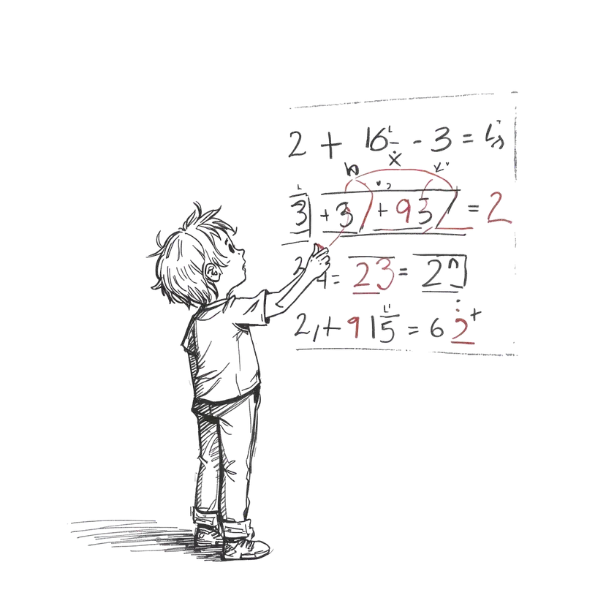
If the category of “gifted” is unstable, the solution is not to ignore difference. It is to design schooling and sport differently.
Rather than beginning with identification, we could begin with curriculum. The central question shifts from “Who is gifted?” to “What does each learner need right now?” Pace, depth, and complexity become responsive features of teaching and coaching, not privileges attached to a label.
A developmentally responsive curriculum would recognise that children progress unevenly across domains. A student might be advanced in mathematical reasoning but still developing in written expression. A young athlete may have exceptional “game intelligence” but still be physically maturing or possess speed without yet developing tactical awareness or emotional regulation under pressure. Chronological age is a blunt organising tool for such diversity.
In this model, challenge is not reserved for a selected group but embedded across contexts. Late developers are not excluded from depth, and early developers are not funnelled into narrow tracks. This is not a call for abandoning high expectations, but a call for making them universal.
Final Thoughts

Perhaps the deepest problem with the “gifted” label is that it limits everyone. Those who are not selected may quietly internalise lower expectations, narrowing their own sense of what is possible. But those who are selected are not untouched either. When gifted becomes their identity, risk-taking can feel dangerous. Children shielded from failure or channelled into narrow acceleration may encounter fewer opportunities to struggle, adapt, and develop resilience.
In both cases, a child’s potential is constrained. Not because children lack ability, but because we have defined it too early and too tightly. A more powerful alternative is not to deny excellence, but to cultivate it more widely and more bravely, by designing environments where challenge, failure, creativity, and struggle are normal for all. If greatness emerges through time, effort, opportunity, and guidance, then our task is not to sort children into categories, but to build the conditions in which more of them can grow beyond them.
Until next time, stay curious
Dr Will Zoppellini




References
- J.H. 2005. The Case for No Conception of Giftedness. In Sternberg, R.J. and Davidson, J.E. 2005. Conceptions of giftedness (Vol. 2). New York: Cambridge University Press.
- Plomin, R. & Deary, I.J. 2015. ‘Genetics and intelligence differences: Five special findings’, Molecular Psychiatry, 20(1), pp. 98–108.
- Sternberg, R.J. and Davidson, J.E. 2005.Conceptions of giftedness (Vol. 2). New York: Cambridge University Press.
- Sternberg, R.J. and Kaufman, S.B. eds., 2011.The Cambridge handbook of intelligence. Cambridge University Press.
- Gould, S.J. 1996.Mismeasure of man. WW Norton & company.
- Foucault, M. 1995. Discipline and punish: The birth of the prison. New York: Vintage. (Original work published 1975.)
- Nisbett, R.E., Aronson, J., Blair, C., Dickens, W., Flynn, J., Halpern, D.F. & Turkheimer, E. 2012. ‘Intelligence: New findings and theoretical developments’, American Psychologist, 67(2), pp. 130–159.
- Ozcan, D. & Kotek, H. 2015. ‘What do the teachers think about gifted students?’, Journal for the Education of the Gifted, 38(2), pp. 123–147.
- Balyi, I., 2001. Sport system building and long-term athlete development in British Columbia.Coaches report, 8(1), pp.22-28.
- Balyi, I., Way, R. and Higgs, C. 2013.Long-term athlete development. Human Kinetics.
- Cobley, S., Baker, J., Wattie, N. & McKenna, J. 2009. ‘Annual age-grouping and athlete development: A meta-analytical review of relative age effects in sport’, Sports Medicine, 39(3), pp. 235–256
- Côté, J., Lidor, R. and Hackfort, D. 2009. ISSP position stand: To sample or to specialize? Seven postulates about youth sport activities that lead to continued participation and elite performance.International journal of sport and exercise psychology, 7(1), pp.7-17.
- Côté, J. and Fraser-Thomas, J. 2007. Play, practice, and athlete development. InDeveloping sport expertise (pp. 39-50). Routledge.
- Preckel, F., Götz, T. and Frenzel, A. 2010. Ability grouping of gifted students: Effects on academic self‐concept and boredom.British Journal of educational psychology, 80(3), pp.451-472.
- Dweck, C.S. and Leggett, E.L. 1988. A social-cognitive approach to motivation and personality.Psychological review, 95(2), p.256.
- Kamins, M.L. and Dweck, C.S. 1999. Person versus process praise and criticism: implications for contingent self-worth and coping.Developmental psychology, 35(3), p.835.
- Mueller, C.M. and Dweck, C.S. 1998. Praise for intelligence can undermine children’s motivation and performance.Journal of personality and social psychology, 75(1), p.33.
- Dweck, C.S. 2002. The development of ability conceptions.Development of achievement motivation, pp.57-88.
- Snyder, K.E., Malin, J.L., Dent, A.L. and Linnenbrink-Garcia, L. 2014. The message matters: The role of implicit beliefs about giftedness and failure experiences in academic self-handicapping.Journal of Educational Psychology, 106(1), p.230.
- Berlin, J.E. 2009. It’s all a matter of perspective: Student perceptions on the impact of being labelled gifted and talented.Roeper Review, 31(4), pp.217-223.