

The Foundation of Learning: Strategies to Cultivate Self-Esteem in Education
25 July, 2025

Author Dr Will Zoppellini
Before a child learns to write an essay, they must first believe they have ideas. Before they solve a problem, they must trust they are a thinker. Before they step forward to speak, they must feel their voice matters.
This belief in oneself, the quiet courage to keep going, even when the path is steep, is not a luxury. It is the foundation from which all learning is cultivated. It’s more important than any standardised test, and more enduring than grades.
It compels a child in class to raise their hand and attempt to answer the question, even when they got the last one wrong and someone laughed. Because without strong self-beliefs, even the brightest child will eventually stop trying.
Self-esteem isn’t built on compliments, and it isn’t just about feeling good. It’s about feeling capable, resilient, and confident to try again after failure, because they know they can.
Table of Contents
Yet it often can be treated as an extra, something we hope children simply “develop” on their own, or something we try to boost with false praise. Without it, a child may learn facts but struggle to use them. They may follow steps, but fear inventing their own.
This week, I’m unpacking why self-esteem is a vital part of learning, how it impacts achievement, and how features from growth mindset can help children to believe in themselves. I’ll also explore practical strategies to nurture this in meaningful, lasting ways.
It’s time to find a quiet space, pour your coffee, and explore how to support children in thinking positively about who they’re becoming.
What is Self-Esteem?
An important distinction to make is that self-concept is the metal representation of what we think about the self. Self-esteem is how we feel about it, the positive or negative evaluations we assign to our sense of self1.
Therefore, self-esteem is a child’s inner voice saying either the positive beliefs, high self-esteem, such as “I’m capable and I matter”, with feelings like pride or confidence. Or, the negative beliefs, low self-esteem, where they believe they are inadequate, with feelings of shame and doubt1.
Key Terms Explained
- Self-Concept
- Self-Esteem
In plain terms, a child with healthy self-esteem feels proud of who they are and believes they can handle challenges. A child with low self-esteem often doubts themselves and generally avoids taking risks or engaging in new things.
Why Self-Esteem Matters in Education
In education, research shows that children with high self-esteem tend to have a host of positive outcomes4,5. These include performing better academically, enjoying challenges, building stronger friendships, and benefit from better mental health6. Healthy self-esteem in childhood has even been linked to greater happiness and lower levels of risky behaviours later in life7.
By contrast, low self-esteem can lead children to doubt their abilities and disengage. The evidence suggests that children with low self-confidence are more likely to avoid challenges and academic risks1,8. For example, a child with fragile self-esteem may not raise their hand in class (even when they know the answer) or may give up quickly when work gets difficult. This creates a vicious cycle: the less they participate, the more they feel incapable, and the further their self-esteem erodes.
That’s why building a positive self-esteem is so critical to learning. A child who feels safe, capable, and valued is far more likely to persevere through setbacks and enjoy the process of learning. When children believe in themselves, they’re more likely to engage in learning activities or try things that they haven’t done before.
Growth Mindset: A Bridge Between Learning and Self-Esteem
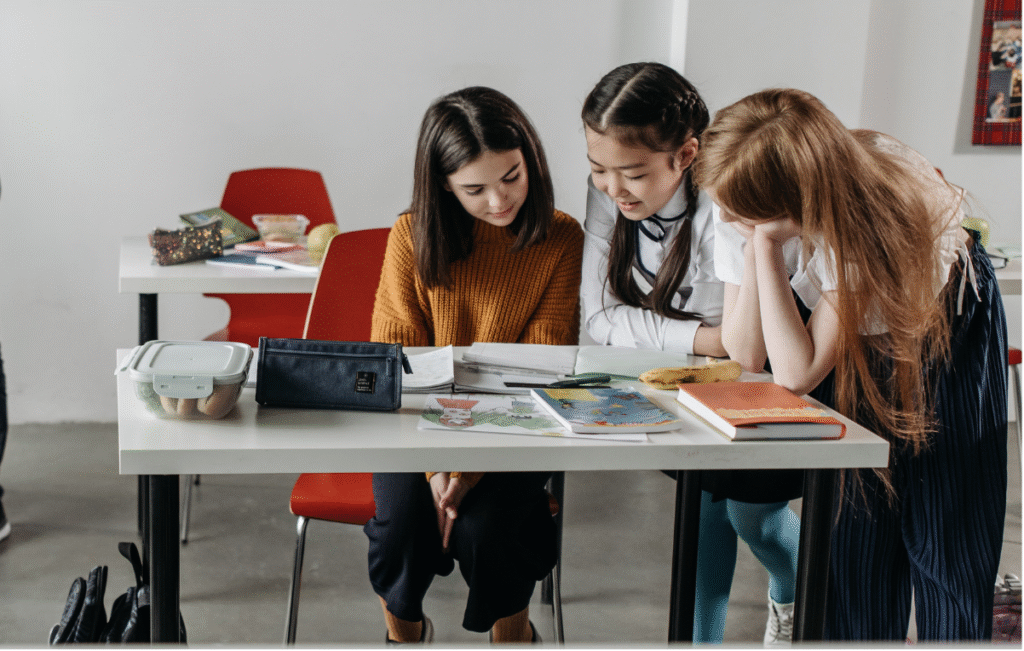
Here’s where features of growth mindset and building self-esteem go together like coffee and cake.
Growth mindset is the belief that human qualities, like intelligence, personality, and morality, can be developed.
When children adopt this view, they tend to handle setbacks more constructively, which supports and builds their self-esteem.
Instead of thinking, “I’m just no good” and feeling inadequate, a growth-minded child tends to understand that they simply haven’t mastered something “yet”. In research, children report having less shame or self-doubt about not being capable or “good” at skills straight away.
Several studies found that adolescents with a growth mindset tend to have higher self-esteem and healthier emotional responses to challenges⁷. Their self-perception doesn’t rely on being perfect or capable immediately, but that they could grow and develop with effort and study strategies.
Concrete steps to nurture self-esteem everyday
1. Set Appropriate Challenges
- Match tasks to the student’s current ability. This means not too easy, not overwhelmingly hard. The sweet spot is where students are either just succeeding or just failing.
- Avoid giving meaningless praise for low-effort tasks. Children can sense when praise is unearned, and it undermines their confidence rather than building it.
- The nurturing of self-esteem should not come at the expense of learning. The best self-esteem builder is achievement, earned through effort and supported with guidance.
- For parents, the same principle applies, embed these ideas in everyday interactions, from homework support, training for sport, or learning a musical instrument.
“Giving students easy tasks and praising their success tells students that you think they’re dumb. It’s not hard to see why. Imagine being lavishly praised for something you think is pretty Mickey Mouse. Wouldn’t you feel that the person thought you weren’t capable of more and was trying to make you feel good about your limited ability?” –Dr Carol Dweck, The founder of growth mindset
2. Be Open About Their Current Skills
- Don’t sugarcoat challenges. If a child isn’t proficient in something, let them know compassionately and clearly.
- Be specific, not vague. “You need to work on connecting your paragraphs” is more helpful than “You’re not a good writer”
- Always separate the skill or Knowledge from the person. Mistakes and gaps in knowledge don’t define a child.
- Avoid labelling children as “smart” or “a genius”, these labels set up fragile self-concepts that can collapse when difficulties arise.
3. Help Them Identify the Skills Needed to Pursue Their Goals
- Help children set concrete learning goals. Whether they want to learn to play basketball, master writing an essay, improve their history knowledge, or improve in science. These are all large areas that need steps.
- Break goals into smaller, manageable components. For example, in writing, it may start with a way to reflect on organising ideas.
- Ask prompts like:
- “What do you want to learn today?”
- “What do you want to know more about?”
- “What skills do you already have that might help you here?”
4. Guide them to understand how to Build the Skills
- Give step-by-step guidance. No generic advice, be clear on what the actions are.
- Mix direct instruction with reflective prompts, this builds independence and confidence.
- Scaffold tasks so they can succeed with just the right level of support.
- Use prior experiences to show learning is transferrable between skills, subjects, or tasks:
- “When have you had to think like this before’?”
- “What do you already know that might be useful?”
5. Support the development of Learning Attitudes, Work Habits, and Strategies
- Attitude – could mean reframing errors. If they have struggled but they know the sticking point and they found this themselves, then it’s a good attitude to attack it and not dwell on it.
- Work habits – help them discover how they work best, whether it’s silence or rocking out to ACDC. Habits may also be understanding ‘focus’ changes and that you need breaks. For example: When I write and I feel motivated or inspired, I write in blocks of 45minutes – 1 hour and I take a 10-15 minute break and repeat. If I am having an awful day, I still write, but I do 15-20 minutes and take a 5 minute break, then repeat.
- Teach general learning strategies: planning, drafting, peer support, asking for help or checking work.
- Encourage collaboration and inspiration from others. Growth mindset includes finding models in peers, not just working in isolation.
Tips to Implement these steps:
- Always guide reflection back to the process. When they have achieved something and you are celebrating, instead of the generic ‘well done’, ask questions like:
- “What did you do to further your thinking?”
- “What breakthroughs have you made?”
- “What did you learn that you didn’t know before?”
This highlights how they learnt and what they have achieved, it improves self-esteem and it gives them a template to use next time they start a subject from zero.
- During difficult periods in the process, you can draw focus to progressing habits or micro-achievements. For example, have they started changing their work habits and begun to collaborate with peers. This is positive in strategy building, but patience may be needed for achievement in the skill or subject.
- These are much more valuable techniques than offering generic phrases like “you can do it”, which offers no insight or reinforcement of effort, strategy, or resilience.
*See my post on feedback and praise
Final thoughts

We are developing a child’s capacity to feel capable and worthy in the face of accomplishments, failure, confusion, and frustration Building self-esteem doesn’t require protecting children from failure. It requires helping them walk through it with the tools, the mindset, and the self-belief that they’ll come out stronger.
Let’s collectively take the time to ensure every child gains healthy self-esteem for their lifelong learning journey.
Until next time, stay curious
Dr Will Zoppellini
*A quick note: this post focused specifically on how features from growth mindset combined with several teaching methods can support positive self-esteem. Self-esteem is also shaped by other factors such as relationships, environment, trauma, personality, and more. This is a complex concept, and all these factors should be considered when a child’s self-esteem is considered to be low.




References
- Hayes, N., 2017.Fundamentals of social psychology. Routledge.
- Zhao, H., Zhang, M., Li, Y. and Wang, Z., 2023. The relationship between a growth mindset and junior high school students’ meaning in life: a serial mediation model.Behavioral Sciences, 13(2), p.189.
- Marsh, H.W. (1990). “Causal ordering of academic self-concept and academic achievement: A multiwave, longitudinal path analysis”. Journal of Educational Psychology. 82 (4): 646–656.
- Orth U.; Robins R.W. (2014). “The development of self-esteem”.Current Directions in Psychological Science. 23 (5): 381–
- Baumeister, R. F.; Campbell, J. D.; Krueger, J. I.; Vohs, K. D. (2003).”Does High Self-Esteem Cause Better Performance, Interpersonal Success, Happiness, or Healthier Lifestyles?”. Psychological Science in the Public Interest. 4 (1): 1–
- Orth, Ulrich; Robins, Richard W. (2022).”Is High Self-Esteem Beneficial? Revisiting a Classic Question”. American Psychologist. 77 (1): 5–
- Nussbaum, A.D. and Dweck, C.S., 2008. Defensiveness versus remediation: Self-theories and modes of self-esteem maintenance.Personality and Social Psychology Bulletin, 34(5), pp.599-612.
- Dweck, C. S. (2002) ‘Caution – Praise Can Be Dangerous’, in Abbeduto, L. (ed.) Taking Sides: Clashing Views on Controversial Issues in Educational Psychology, pp. 117–125. Guildford, CT: McGraw-Hill.
- Baumeister, R. (1996) ‘Should Schools Try to Boost Self-Esteem?’, American Educator, Summer: 14–19.
- Humphrey, N., 2004. The death of the feel-good factor? Self-esteem in the educational context.School Psychology International, 25(3), pp.347-360.
- Haimovitz, K. and Dweck, C.S., 2017. The origins of children’s growth and fixed mindsets: New research and a new proposal.Child development, 88(6), pp.1849-1859.