

Bibs, Whistles, and Burnout: How to Restore Play in Children’s Sport
26 September, 2025

Author Dr Will Zoppellini
Remember when you were a child and you used play at the park with your friends? One kid would bring the bibs, another would carefully measure out the size of the goals, someone else would volunteer as referee. No? Me neither, because it never happened that way once.
You turn up in all sorts of clothes and somehow never pass the ball to the wrong person. Clothing, bags, or pieces of a tree marked out the goals. The rules are somewhat adhered to, but any arguments are quickly avoided with the combined urge to keep playing. If the ball went into the road, the hedge, or became stuck, play paused until the group collaborated to get it back. Then the game carried on. Regardless of country or culture, children find ways to create and sustain play. Until, of course, the adults arrive.
Suddenly, a game is dressed in bibs, whistles, clipboards, registration fees, regulation shoes, parent-only areas, and referees. A ball that could once have been any size, material, or even a plastic bottle, now has to be branded, official, and “league-approved”. Children used to problem-solve and organise their games for free. Now, they are funnelled into managed systems with less freedom, less agency, and ironically less joy.
Not too long ago, neighbourhoods echoed with the sound of children inventing rules and playing until the sun went down. Today, those sounds are quieter. In their place, car rides to scheduled training, adult-directed drills, and carefully monitored games. Every move is overseen, every mistake corrected, every activity planned.
It raises a question worth asking, have we squeezed the play out of children’s physical activity?
Table of Contents
Somewhere along the way, youth sport shifted from joy, creativity, and exploration to miniature versions of professional systems. We meant well, and some key ideas of developing discipline, teamwork, physical skills, and character are all valid. But somehow it appears we went too far. Children as young as six are now placed into ‘academies’, drilled through repetitive exercises, and even told to specialise before their bodies and interests have had the chance to develop1. The problem isn’t organised sport itself, but the way it too often forgets that children are still children.
In today’s post, I’ll explore why we need to reestablish play into youth sport and physical activity, why it matters for skill development, motivation, and wellbeing, and what practical strategies we can use to bring it back.
Grab your coffee, and let’s dive into why play should be at the heart of youth sport.
The Problem with Professionalising Childhood
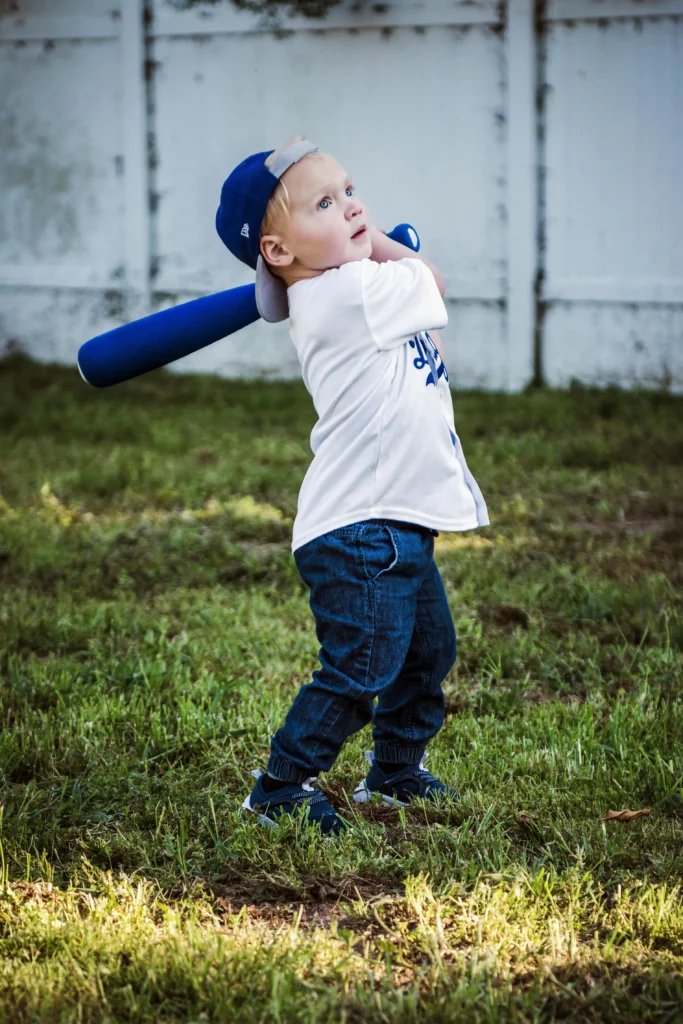
Educators and researchers across the world have established that play in learning is vanishing from formal educational settings. But it isn’t only in classrooms, the same pattern is unfolding in youth sport and physical activity2. Play-based learning remains the most developmentally appropriate way for children to learn3. It develops problem-solving, and nurtures decision-making, resilience, and creativity. However, sport is increasingly delivered in ways that deny children these benefits.
Across much of the world, youth sport has become heavily professionalised. Some children now enter systems where, by age ten, they have accumulated years of structured training and competition experience1. The flaw in this approach is that children are not mini adults. Their physical maturation, growth rates, and cardiovascular development vary dramatically1,4. Yet scaled-down versions of adult drills are often applied with the belief that they are appropriate.
You can see this mismatch clearly when observing the small details. Picture a group of six-year-olds running around in bibs so oversized that they slip off shoulders, flap in the wind, or twist around their knees as they try to kick a ball. Sometimes the bib itself becomes the obstacle. Yet we insist children wear them, as if colour-coded teams matter more than the flow of play. Children tolerate the distraction because that is what the adult in charge has asked for. The irony is that in the park, without bibs, they would never confuse who was on which team.
The issue isn’t just physical. Just as overemphasis on performance, such as exams, discourages children from learning in school, overemphasis on performance, such as winning, discourages them from sport. Studies and surveys show that dropout rates rise steeply as children get older5. Instead of cultivating creativity or a love of movement, result-driven systems leave many with negative experiences. The cost is staggering, as millions of children miss out on lifelong benefits of physical movement that include skeletal strength, cardiovascular health, brain development, and mental wellbeing6.
Several researchers over the past 10-15 years have noted the shortcomings of this traditional approach in youth sport4,5,7. These include:
*flip the tiles to discover more
Overemphasis on technical skills
Overemphasis on direct instruction
Mindless drills
Boredom
We often assume that children running around in sport equates to play-based learning. But if they are standing in line to dribble around cones with no choices to make, or fiddling with bibs that keep sliding off, this is not play. It is structure without joy.
Building the Foundations of Movement & Skill Acquisition
There is some evidence that technical training can support skill acquisition at early ages. But the stronger body of research suggests that what children really need is exposure to a diverse range of movements7.
Let’s consider the development of locomotion. To develop efficient movement competency that helps children acquire physical skills, children should master five gait types: walking, running, galloping, hopping, and skipping8. By age four, most can attempt all five, but not with consistency. Competence develops over time, and it is only around age twelve that gait patterns begin to resemble those of adults8. Using play-based learning approaches and promoting diverse movements in all physical activities can help with this process.
The benefits also extend to neurological development. A child who walks smoothly at age four has the muscle structures needed for other movement types, but awkward skipping shows their brain is still refining control. As children practise varied movements, their brains strengthen the neural pathways that link body coordination with cognition. Locomotor development (among other types of movement) directly supports neurological growth and lays the groundwork for higher-level learning8.
This is why an overemphasis on sport-specific drills can be risky. Narrowing children’s experiences not only limits their movement repertoire but also increases the risk of imbalance, burnout, and even injury. Building broad motor competence creates a stronger foundation for lifelong health and participation in physical activity.
“Learning movement skills is not a process of repeating a solution. It is repeating the process of finding a solution.”
Richard Shuttleworth
Two decades of research indicates that sport skills are learned more effectively with an external focus9, where children play and attention is directed to cues in the environment. Rather than with an internal focus on body mechanics, such as a narrow focus on dribbling around cones10. In other words, children learn skills more effectively by playing the game, not by endlessly repeating isolated drills. When practice is decontextualised, stripped from the information and decision-making of real play, learning is shallow.
Enjoyment as the Key to Retention
A universal truth in any activity children take part in is if they enjoy it, they will stay engaged longer and feel an internal desire to improve. Fun is not the opposite of learning or skill development3, it is the condition that makes both possible. Whether children choose team sports, gymnastics, hiking, surfing, or simply playing outside with friends, joyful engagement is what keeps them moving and reaping the benefits.
The benefits are essential for child development. In early childhood, regular movement enhances skeletal growth, strengthens muscles and bones, reduces stress and anxiety, and supports cognitive development6. Research even shows that motor milestones are linked to advances in social and emotional growth. For example, in an in-depth study with infants, Dr Clearfield11 found that when they transitioned from crawling to walking, their interactions with others grew more sophisticated, this included pointing more, increased vocalising, and shared attention with caregivers. Movement is never “just physical”, it reshapes how children think, feel, and connect.
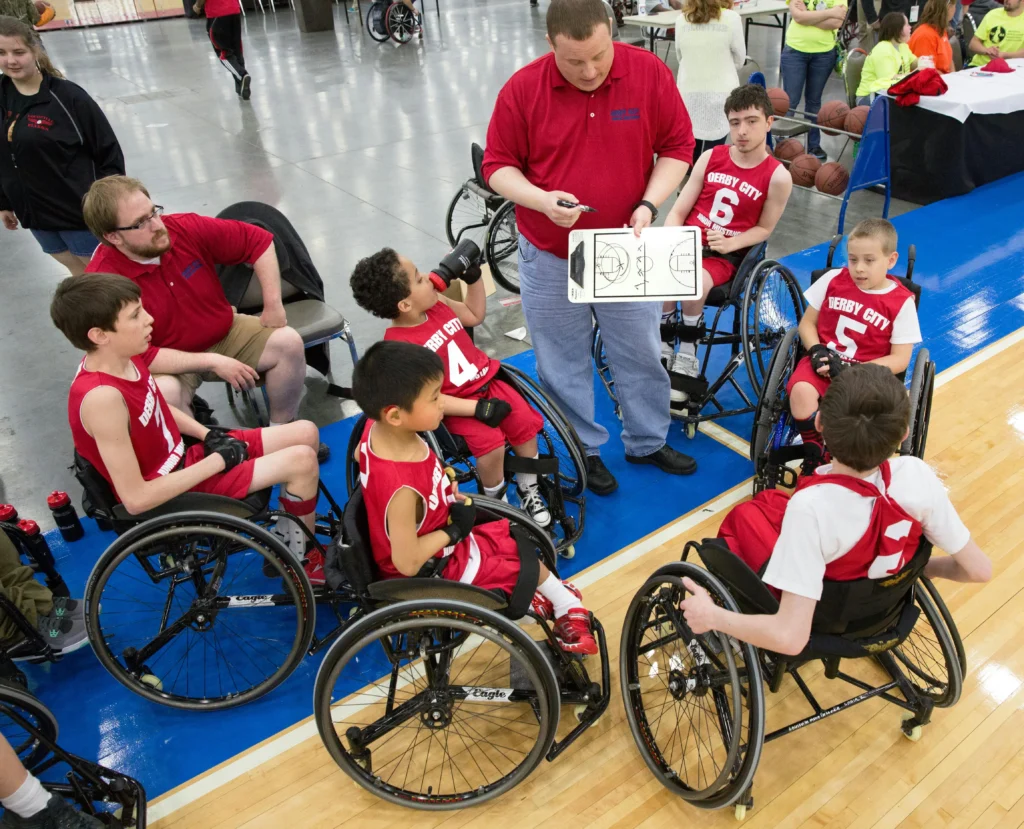
Despite these benefits, dropout from sport and physical activity remains alarmingly high. Children as young as seven are told they are “not good enough,” become bored with repetitive drills, or feel crushed by pressure to win. The irony is that fun, not trophies, is what drives both persistence and performance. Jean Côté’s Developmental Model of Sport Participation underscores this point. His work shows that “deliberate play”, centred on unstructured, child-led activity, is a stronger predictor of long-term engagement (and even elite performance) than early specialisation or structured training12. In fact, a study from Côté and colleagues revealed that many professional athletes actually logged more hours of playful, unstructured activity as children compared to their peers at semi-professional and amateur levels13.
A range of studies have consistently shown that over-structured sport drives kids away, with 60% of children citing “pressure” as the reason they quit4,5,7. What matters is balance between some positive parts of organised activities with a resurgence of free play and guided play activities.
The takeaway is that keeping kids active depends less on direct instruction and rigid structure and more on enjoyment. When children laugh, invent, and take ownership of their play, they are far more likely to carry physical activity into adolescence and adulthood. Play protects against dropout by ensuring sport remains something children want to do rather than something they feel forced to endure.
Practical Ways to Reintroduce Play
So how do we bring play-based learning back into youth sport and physical activity? One proven model is the games approach14. Instead of isolating technical drills, this method begins with simplified, modified versions of the game itself. Children first learn how to play the games, naturally developing tactical awareness, understanding what the game is about, and experimenting with decisions14. Once curiosity is sparked, they naturally want to refine the technical skills needed to succeed.
The games approach is holistic:
Start with carefully crafted games that build tactical understanding.
Move into technical skills when children see their relevance.
Reintegrate skills into game-like play.
Just like playful teaching in a classroom, the role of the adult shifts. Coaches act less like directors and more like guides, asking reflective questions to help children make sense of their experiences. When practice feels like play, children remain engaged, motivated, and more likely to carry movement into their future lives. Four other considerations are:
Protect unstructured time
Leave part of practice open for children to create their own rules or games that help children develop their sense of agency.
Encourage multiple sports
Broaden motor development, movement types, and reduce burnout.
Use guided play
Ask questions like “What happens if…?” to prompt reflection without dictating solutions.
Prioritise joy over results
Celebrate creativity, teamwork, and resilience, not just scores, particularly at early age groups.
Final Thoughts

The benefits of play-based learning in children’s sport and physical activity includes sharper decision-making, stronger collaboration, healthier motor development, and greater emotional resilience.
The belief that sport must be “serious” for children to learn is misguided. In reality, play-based approaches deepen understanding and are more developmentally appropriate. For adolescents, play is also a proven way to increase retention and sustain engagement. Children still face confusion, frustration, challenge, and competition, but through play, they learn to regulate emotions, persist, and adapt. Strip play away, and sport becomes little more than another school exam – rigid, joyless, and exclusionary.
Perhaps the real challenge is not whether we allow play back into sport, but how we move youth sport closer to the childhood freedom of playing in the park. Bringing back the creativity, ownership, and joy of unstructured play, while still offering the guidance and support that structured environments can provide. Somewhere in that middle ground lies a version of sport that is both developmentally appropriate and fun.
Until next time, stay curious.
Dr Will Zoppellini


References
- Williams, C., 2007. Physiological Changes of the Young Athlete and the Effects on Sports Performance.SportEX Medicine, (31).
- Côté, J., Strachan, L. and Fraser-Thomas, J. 2007. Participation, personal development, and performance through youth sport. In Positive youth development through sport(pp. 48-60). Routledge.
- Yogman, M., Garner, A., Hutchinson, J., Hirsh-Pasek, K., & Golinkoff, R. M., & Committee on Psychosocial Aspects of Child and Family Health. 2018. The power of play: A paediatric role in enhancing development in young children. Paediatrics, 142(3), e20182058.
- Vealey, R.S. and Chase, M.A., 2016.Best practice for youth sport. Human Kinetics.
- Martens, R. and Vealey, R.S. 2024.Successful coaching. Human kinetics.
- G, Elliot. E, Palmer. S. 2016. ‘Teaching Children and Adolescents Physical Education’. Human Kinetics
- Balyi, I., Way, R. and Higgs, C. 2013.Long-term athlete development. Human Kinetics.
- Whitall, J., 2013. Development of locomotor co-ordination and control in children. InDevelopment of Movement Coordination in Children (pp. 251-270). Routledge.
- Savelsbergh et al., 2003
- Chow, J.Y. 2016. Nonlinear pedagogy in skill acquisition: an introduction. Abingdon: Routledge
- Clearfield, M. 2011. Learning to walk changes infants’ social interactions. Infant Behaviour and Development, 34 (1), 15-25
- Côté, J. and Vierimaa, M. 2014. The developmental model of sport participation: 15 years after its first conceptualization.Science & sports, 29, pp.S63-S69.
- Côté, J. and Hancock, D.J. 2016. Evidence-based policies for youth sport programmes.International journal of sport policy and politics, 8(1), pp.51-65
Light, R. 2012. Game sense: Pedagogy for performance, participation and enjoyment. Routledge.