

The Changing Shape of Intelligence: From Infancy to Adulthood
27 February, 2026

Author Dr Will Zoppellini
When Leo was five, he was described as “bright but inconsistent.” At seven, he was “good at math but not a reader.” At ten, he was “not really academic.” Secondary school did not magically transform him. At thirteen, he was distracted. At fourteen, he drifted. Teachers wrote, “capable, but lacks focus.” At fifteen, he passed most subjects, but nothing about him suggested brilliance.
At sixteen, something shifted, not dramatically, and not overnight. He joined the robotics club. He found one teacher who asked better questions than worksheets could answer. He stayed after school to tinker. At eighteen, he began to connect ideas across subjects. Finally, at twenty, he was excelling at university, not because he had suddenly become intelligent, but because something in his developmental story had finally aligned.
So, what happened? Did his intelligence suddenly switch on? Perhaps the better question is “what conditions finally allowed his curiosity to breathe?
Table of Contents
My previous posts in this series have focused on myth-busting misconceptions about human intelligence, and related aspects such as IQ testing or gifted education. This week, I’m moving the discussion forward, to examine how intelligence actually develops. What unfolds across infancy, childhood, adolescence, and into early adulthood. With suggestions on what small, deliberate actions teachers, parents, and coaches can take to support that development.
Remember intelligence is not a number, it is not a fixed trait, and it is not a type of thinking. It is a developmental process.
So, grab your coffee, settle in, and let’s step into the research together.
Nature and Nurture: A Developmental Partnership
Let’s be clear about something important. While we cannot rewrite a child’s genetic code, we absolutely shape the conditions under which that code is expressed. Adults can have a direct and measurable impact on how intelligence develops.
There is no serious current position that denies genetic influence on intelligence. But the long-held belief that genes or “nature” is responsible for intellectual ability is misleading. Intelligence emerges from the continuous interaction between nature and nurture1. Genes and the environment.
Developmental scientists are clear on this point. For example, Dr Sheridan2 notes that interactions between biology and environment produce substantial variability in children’s outcomes. Other researchers emphasise that much of a child’s development is a dynamic process involving genetic, neurological, emotional, behavioural, and environmental factors working together3,4. When we see differences in reasoning, attention, or memory, we are witnessing systems interacting over time, not a single cause unfolding.
Genetics do matter. Executive functions such as working memory, inhibition, and cognitive flexibility are strongly associated with intelligence5 and twin studies show substantial heritability for these capacities6,7. But heritability is frequently misunderstood. It refers to variation within a population under specific environmental conditions. Overall, it does not describe fixed limits for individuals, because a highly heritable trait can still be shaped profoundly by experience1.
This becomes especially clear when we consider socioeconomic context. For example, several studies across the last 20 years have found that between children from more advantaged environments, genetic differences explained a greater proportion of IQ variation8, whereas in disadvantaged contexts, environmental factors played a larger role1.
Neuroscience reinforces this partnership. Although most neurons are present before birth, neural connectivity continues to develop for many years9. Experience shapes this wiring as structural brain changes have been observed following skill learning3. Intelligence is not a fixed inheritance or a blank slate. It develops within a living system where biology and experience are collaborators, not adversaries.
The Developmental Arc of Intelligence
If intelligence is not fixed, then we should expect to see it unfold over time. Yet we are often confused when that unfolding does not look steady or consistent. What the research reveals is not a straight upward line, but a living system that builds, reorganises, and fluctuates from infancy through adolescence.
Infancy: The Foundations of Processing
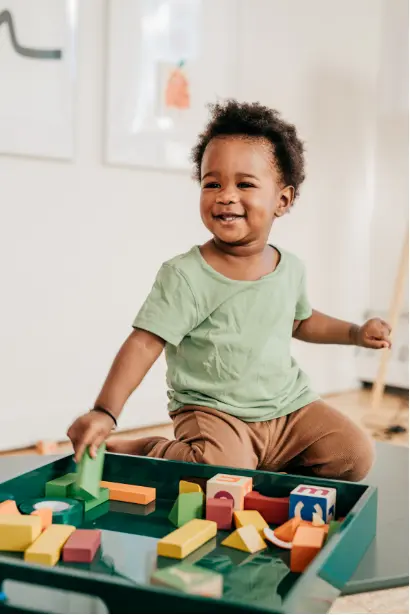
Intelligence begins earlier than many people assume. Long before children speak in sentences or solve arithmetic problems, their cognitive systems are already differentiating.
Research beginning in the 1970s showed the way infants process information, particularly how they respond to new sights and patterns, is linked to how they perform on intelligence tests years later10,11,12. Babies who more quickly notice novelty, compare patterns, and sustain attention are, on average, more likely to demonstrate stronger reasoning into adolescence and adulthood. One long-term study found that attention measures taken between 6 and 12 months were associated with IQ and educational attainment at age 2113. These brief measures in infancy seem to show meaningful connections to outcomes in education decades later.
However, these links are moderate, and not a certainty. Early processing differences provide a starting point, not a fixed trajectory. Development unfolds through thousands of interactions in language, relationships, education, challenge, and opportunity. What this research shows is that the foundations of intelligence are visible early in attention, pattern recognition, and learning efficiency, the building blocks of later reasoning.
Childhood: Variability as the Engine of Growth
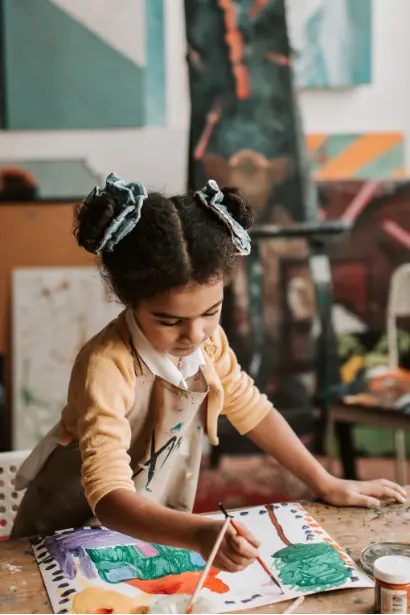
Anyone who has worked with children knows instinctively that there is a high amount of variability in their learning. A child may reason brilliantly one day and struggle the next.
Dynamic systems theory14 provides a powerful framework for understanding this. In this theoretical framework intelligence is not something a child “has” at a stable level. It emerges from interactions between the child and the context. Behaviour is organised, but it fluctuates depending on task demands, emotional state, familiarity, and support1.
This pattern does not disappear as childhood continues but it becomes more complex. As children grow, their thinking is shaped not only by neural maturation but by confidence, identity, feedback, opportunity, and exposure. A child who begins to doubt their competence may avoid challenge, reducing the very stimulation that strengthens cognitive connections. Conversely, a child who encounters meaningful problems, rich language, and supportive guidance is more likely to engage deeply, strengthening integration across skills1,2. Changes in peer groups, classroom expectations, or even subtle shifts in teacher belief can influence engagement and effort15. Intelligence therefore develops within a feedback system where experience shapes performance, performance shapes confidence, confidence shapes future engagement.
What we observe as variability is often this system recalibrating. Over time, repeated engagement with challenge allows separate skills to integrate into more complex mental structures.
Adolescence: Reorganisation and Abstract Thought

Adolescence is not simply “more of the same.” It is a period of considerable reorganisation.
Cognitively, this period is characterised by increasing capacity for abstraction, the coordination of ideas into systems of principles. Fluid reasoning continues to mature, supported by ongoing changes to neural pathways. Executive functions, particularly cognitive flexibility and planning, become more refined1,16.
At the same time, accumulated knowledge continues to expand through learning and experience, which supports and strengthens the development of intelligence. As adolescents develop deeper understanding within specific subjects, they are able to reason more flexibly and with greater sophistication in those areas15.
Importantly, adolescence also involves social and emotional reorganisation. Motivation, identity formation, peer context, and self-beliefs increasingly shape engagement with cognitively demanding tasks3. Intelligence at this stage is not simply a product of neural maturation, but is influenced by purpose, belonging, challenge, and opportunity.
Across infancy, childhood, and adolescence, intelligence does not move in a straight line. It builds foundations, fluctuates dynamically, and reorganises into more complex structures. Continuity exists, but so does change.
Strengthening the Capacity to Think
For years, public debate has focused on whether “IQ” can be increased. But that may not be the most useful question. A better one is “can we strengthen a person’s ability to think, learn, reason, and solve problems in cognitively demanding situations?”
The distinction matters.
Intelligence, particularly in academic settings, is often measured through tasks requiring reasoning, comprehension, and problem solving. Achievement, by contrast, reflects what has been learned and stored in long-term memory, such as knowledge, concepts, procedures, strategies, and beliefs1. It is important to recognise that the two are deeply intertwined.
General reasoning ability supports learning, but accumulated knowledge strengthens future reasoning. To explain this clearly, I like to refer to Carroll’s distinction17 between what he termed “fluid intelligence” (reasoning relatively independent of prior knowledge) and “crystallised intelligence” (knowledge-based ability) because it helps clarify this relationship. Schooling primarily focuses on and builds crystallised intelligence. However, crystallised intelligence, in turn, can make future problem solving more efficient.

Let’s consider mathematics. Arithmetic fluency is not simply a matter of “being good at numbers.” It depends on conceptual understanding, for example, the ability to mentally represent numbers along a number line. Students without this conceptual foundation often struggle with calculation, even if they appear capable in other areas. When that structure is explicitly taught, performance improves1.
The same applies to reading comprehension and problem solving. Success depends not only on general reasoning ability but on well-developed schemas, otherwise called mental templates that organise information and guide interpretation1. In this sense, knowledge scaffolds thinking15.
Our focus should be on teaching deeply rather than chasing scores, because what we are truly building is the capacity to think.
How We Can Support the Development of Intelligence
If intelligence develops through biology, experience, thinking, and motivation, then our support must reach across all of these layers1. Children need deep knowledge, clear strategy instruction, space to reflect on their own thinking, and environments that feel safe enough to sustain effort. They need challenge without threat, and feedback that strengthens strategies and doesn’t define who they are. Here are 5 takeaways to focus on:
There Is More Than One Way to Learn
Intelligence emerges from the interaction between a child’s unique neural wiring and their experiences1. While biology may influence how easily certain skills develop, the brain is adaptive and capable of building alternate pathways. If a student struggles, it does not mean they cannot learn, it probably means they need a different route15. Effective teaching recognises that there are multiple ways to explain, practise, and demonstrate understanding.
Use Multiple Modalities
Different cognitive functions are supported by different neural systems1. Language, spatial reasoning, movement, and auditory processing do not rely on identical brain networks3. Teaching through varied modalities, such as discussion, visuals, movement, storytelling, diagrams, or music, allows multiple systems to engage in learning. This not only strengthens understanding but also sustains attention and motivation. Assessment should allow students to show learning in more than one format15.
Change Takes Time So Manage Cognitive Load
Neural connections strengthen gradually through repetition and integration. Deep learning cannot be rushed. Overloading students with too much information too quickly overwhelms working memory and limits retention3. Support learning by breaking content into manageable segments and using “external brain” tools such as graphic organisers, visual models, glossaries, guided notes, and structured frameworks15.
Connect Learning to Real Contexts
Knowledge that is memorised but not used quickly becomes inactive. Learning from real-life problems, concrete experiences, and meaningful applications helps students construct durable understanding. When ideas are applied across situations, multiple retrieval pathways are built, making future problem solving more flexible15. The question should not be “Can they recall it?” but “Can they use it?”
Help Students See Patterns and Connections
The brain naturally seeks patterns1. New information is retained more effectively when it connects to existing knowledge. Explicitly link new ideas to what students already understand, and highlight similarities and differences3. Encourage learners to generate their own examples. Intelligence grows not through isolated facts, but through networks of meaning that become increasingly integrated over time.
Final Thoughts

Intelligence is not a switch that flicks on or off, and it isn’t a score. It is a living system shaped by biology, strengthened through experience, reorganised by challenge, and sustained by belief. From the attentive infant noticing patterns, to the child navigating fluctuations in confidence and context, to the adolescent weaving knowledge into abstraction, intelligence unfolds in motion. It builds quietly, recalibrates often, and deepens when given time, meaning, and opportunity.
Perhaps the most important truth in all of this research is that development is never finished. The question is not whether intelligence can grow, but whether the environments we design invite it to. When we teach deeply, connect meaningfully, and respond patiently to variability, we are not simply improving performance, we are strengthening the architecture of thinking itself.
Until next time, stay curious
Dr Will Zoppellini



References
- Sternberg, R.J. and Kaufman, S.B. eds. 2011.The Cambridge handbook of intelligence. Cambridge University Press.
- Sharma, A., Cockerill, H. and Sanctuary, L. 2021. Mary Sheridan’s from birth to five years: children’s developmental progress. Routledge.
- Gillibrand, R., V. Lam and V.L. O’Donnell. 2016. Developmental psychology. 2nd ed. New York: Pearson
- Nisbett, R.E., Aronson, J., Blair, C., Dickens, W., Flynn, J., Halpern, D.F. and Turkheimer, E. 2012. Intelligence: new findings and theoretical developments.American psychologist, 67(2), p.130.
- Friedman, N. P., Miyake, A., Corley, R. P., Young, S. E., DeFries, J. C., & Hewitt, J. K. 2006. Not all executive functions are related to intelligence. Psychological Science, 17, 172– 179.
- Polderman, T. J. C., Posthuma, D., De Sonneville, L. M. J., Stins, J. F., Verhulst, F. C., & Boomsma, D. I. 2007. Genetic analyses of the stability of executive functioning during childhood. Biological Psychology, 76, 11–20.
- Polderman, T. J. C., Gosso, M. F., Posthuma, D., Van Beijsterveldt, T. C. E. M., Heutink, P.,Verhulst,F.C. 2006. A longitudinal twin study on IQ, executive functioning, and attention problems during childhood and early adolescence. Acta Neurologica Belgica, 106, 191–207.
- Turkheimer, E., Haley, A., Waldron, M., D’Onofrio, B., &Gottesman, I.I. 2003. Socioeconomic status modifies heritability of IQ in young children. Psychological Science, 14, 623–628.
- Plomin, R. & Deary, I.J. 2015. ‘Genetics and intelligence differences: Five special findings’, Molecular Psychiatry, 20(1), pp. 98–108.
- Fagan, J.F. and Singer, L.T. 1983. Infant recognition memory as a measure of intelligence.Advances in infancy research.
- McCall, R.B. and Carriger, M.S. 1993. A meta‐analysis of infant habituation and recognition memory performance as predictors of later IQ.Child development, 64(1), pp.57-79.
- Kavšek, M., 2004. Predicting later IQ from infant visual habituation and dishabituation: A meta-analysis.Journal of Applied Developmental Psychology, 25(3), pp.369-393.
- Fagan, J.F., Holland, C.R. and Wheeler, K. 2007. The prediction, from infancy, of adult IQ and achievement.Intelligence, 35(3), pp.225-231.
- van Geert, P. and Steenbeek, H. 2005. Explaining after by before: Basic aspects of a dynamic systems approach to the study of development.Developmental review, 25(3-4), pp.408-442.
- Woolfolk, A. 2021. Educational psychology (14th global edition).
- Friedman, N.P., Miyake, A., Young, S.E., DeFries, J.C., Corley, R.P. and Hewitt, J.K. 2008. Individual differences in executive functions are almost entirely genetic in origin.Journal of experimental psychology: General, 137 (2), p.201.
- Sternberg, R.J. 2003.Wisdom, intelligence, and creativity synthesized. Cambridge University Press.