

How to Grow Your Brain: What Neuroscience Tells Us About Learning, Mistakes, and Motivation
4 July, 2025

Author Dr Will Zoppellini
Picture a child standing at the base of a climbing wall, their hands chalked, eyes wide and focused. They grip the first hold, pull themselves up, the excitement grows, and they start to climb. Then they slip, and land with a gentle thud on the mat below. They look back at you, uncertain.
Regardless of the setting, when we support children learning, we stand by, encouraging them to try again. We watch as they test their strength, to see if they are persistent to go again, to find new paths, and build confidence with every fall and climb. All the while, inside their mind, something even more extraordinary is happening… their brain is changing.
Table of Contents
Yet too often, the messages from adults can hinder this process. Some are told not to climb at all, and some are directed in how to climb in every step, taking away their ability to problem solve and learn.
We say things like I’m not sure this is for you. I’ve observed some educators and parents tell children as young as 7 that sport isn’t your thing, or you’re just not a creative person.
We’re not shielding children from failure or keeping them safe, we’re closing off roads before they’ve had the chance to explore.
These messages quietly shape what they believe they can or cannot do. They start avoiding challenges, fearing mistakes, doubting their own potential.
In this post, I’ll explore neuroscience research examining how the brain changes when we nurture a growth mindset during learning 1. Explaining what you as a teacher, coach, or parent can do to help children become more resilient, independent, and improve their capacity for learning.
Grab your coffee, settle in, and let’s sip through the fascinating world of neuroscience and growth mindset.
What Brain Research Tells Us About Learning
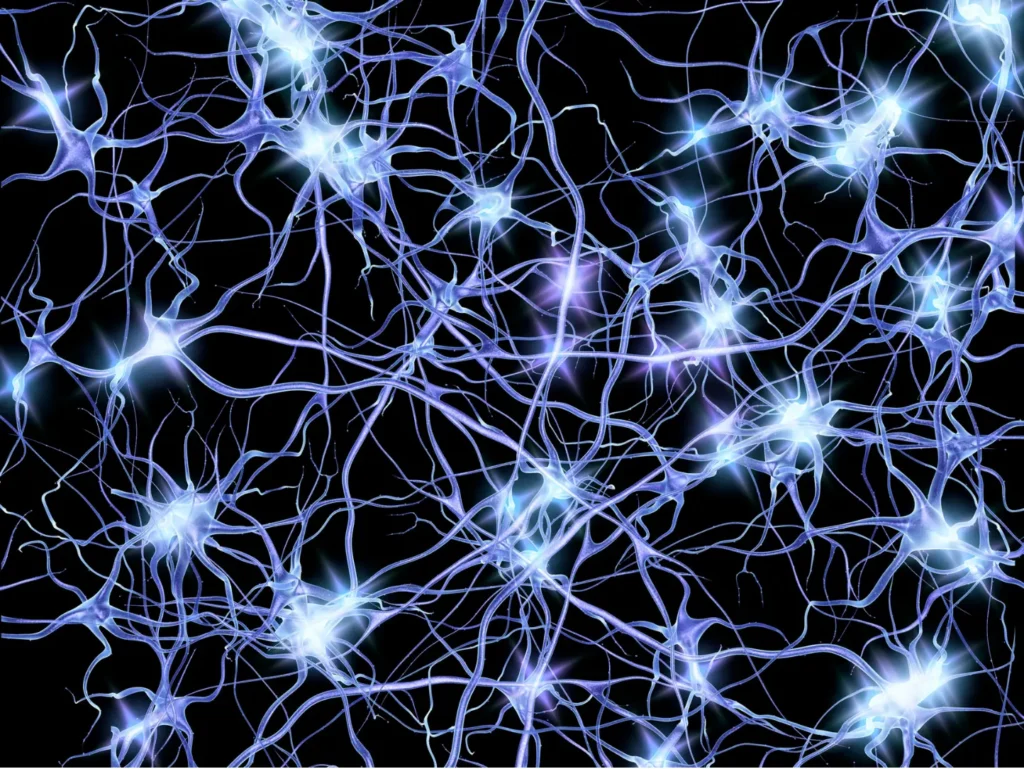
Picture your brain like a muscle 2. Just like muscles grow stronger and bigger through exercise, our brains get stronger and develop by being used and challenged.
A child who picks up a violin for the first time screeches and scratches. But with practice, those clumsy fingers learn the to make the notes dance.
Inside your brain’s cerebral cortex are billions of neurons (tiny nerves) connected to each other through an intricate and complex network of branches. Different parts of the brain communicate through this network allowing you to think, operate something, solve a problem, and move 3,4,5.
As you learn and practice something new, the connections between neurons become stronger and even start to multiply and grow new branches. The more you engage and challenge your brain the more it grows. This process is called neuroplasticity: the brain’s ability to reorganise itself through forming new neural connections 2.
We see examples of this all the time. When babies start to talk, when children start to read, when someone learns a new subject or picks up a new language or instrument. All these processes increase the brains cognitive functioning and make it stronger.
These changes are permanent, but it doesn’t happen passively. It depends on challenge, practice, reflection, and repeat.
When a child holds a growth mindset, they believe in this scientific process, even though they probably don’t know the terms. They believe they can learn anything.
They embrace challenges and persist through difficulties, meaning that they keep their minds engaged in practicing the subject for longer, allowing time for new neurons to grow.
The Neuroscience Research & Growth Mindset
An important connection here is between intrinsic motivation and growth mindset.
Intrinsic motivation means engaging in a task for the enjoyment or satisfaction it brings, rather than for external rewards. This is vital for learning because children stay engaged in developing a skill or mastering a subject when they have a desire to do so.
Neuroscientists show a strong connection between motivation and learning by using technology like electroencephalography (EEG) and functional magnetic resonance imaging (fMRI). This allows them to observe brain activity in real time
Children’s brains light up with activity when they are challenged with tasks they enjoy.
One key here is dopamine, a neurotransmitter involved in pleasure, reward, and motivation. Researchers have shown that dopamine is activated when tasks are enjoyable or include a sense of autonomy 2.
Key terms Explained
- Neuroplasticity:
The brain’s ability to reorganize itself by forming new neural connections throughout life.
- Dopamine:
A neurotransmitter that plays a key role in motivation, reward processing, and emotional regulation. It helps individuals stay focused on tasks and adjust behaviour based on feedback.
- Anterior Cingulate Cortex (ACC):
This neural response boosts attention and engagement, suggesting that motivation can be strengthened by creating environments where learners feel a sense of choice and ownership.
Researchers have found that children with a growth mindset show greater brain activity in areas responsible for error detection and correction. This is observed in the anterior cingulate cortex (ACC) and dorsolateral prefrontal cortex (DLPFC), through brain imaging. This means their brains pay more attention to mistakes and makes them receptive to feedback 6.

In simple terms, growth-minded individuals pay more attention to their mistakes and are more likely to learn from them1,6. This is because they do not see the mistakes as threatening or negative but rather as indicators of where they can improve. This increased attention means they are more likely to engage with and learn from their mistakes, making them more resilient in the learning process2,7.
A research team in the U.S, led by Dr Schroder 7used EEG to measure how children’s brain activity responded to specific events like errors (mistakes) in educational settings. In the study, the children with a growth mindset stayed more engaged in tasks after errors and demonstrated a greater ability to correct themselves.
This shows that fostering a growth mindset can help build intrinsic motivation, causing a surge in dopamine, sharpening attention and engagement 6,7.
In short, children who believe they can grow their abilities also want to keep trying. They see learning as an adventure, and mistakes are simple issues to improve.
how you can help children learn from their mistakes
The results from neuroscientific research have many practical implications for you to help children learn2,7,8. Here are four strategies for improving children’s ability to recognise mistakes and increase their intrinsic motivation:
Avoid comforting phrases
It’s common to comfort children after mistakes. But well intended phrases like “It’s okay, you’re still good at other things” could unintentionally distract from reflecting on the mistake and staying engaged.
Encourage self-reflection:
Rather than pointing out mistakes or offering immediate comfort, prompt children to identify their own errors with questions and resources. This builds self-regulation and autonomy. Finding where they went wrong and fixing it themselves increases motivation.
Practice patience:
Children won’t become reflective overnight. With consistent support, they’ll begin to see mistakes as learning opportunities, not threats. Provide space and time for them to review mistakes independently, adjusting to discovering the error themselves.
Focus on learning, not results:
A goal to improve on a skill or understand a subject, means children are likely to engage meaningfully and become more efficient at error detection. Because they are trying to improve at something they find desirable. If the goal is external validation (i.e. the grade) it is difficult to get children to recover well from mistakes.
A Classroom Example
Let’s make this real.
Picture a class deep into a literature lesson. Aaliyah, a 13-year-old student, is crafting her creative story. She’s using her imagination and trying to detail the characters she’s created.
She shows her first draft to Mr. Khan. There are great characters, but it’s tangled in the middle and hard to follow.

He gently says, “The concept of the story is really imaginative, but the middle section is a little confusing and it’s hard to follow what’s happening towards the end.”
Instead of comforting or telling her exactly what to change, Mr. Khan prompts Aaliyah to read through her draft again and consider the story structure rules he shared at the beginning of the task.
“Take another look at the structure guidelines we talked about, then read your story again and see what you think.”
Aaliyah frowns at first. But she opens her notebook, rereads the instructions, and carefully reviews her work. She starts spotting places where she lost the thread. Slowly, she rewrites a few lines and then reworks the section entirely.
When Mr. Khan circles back, he offers a single suggestion and lets her continue.
Aaliyah’s posture straightens, and she smiles, she gives her second draft.
Mr. Khan responds, “This is definitely an improvement, the story flows much better now, and your brain’s just gotten stronger because you spotted that yourself.”
By avoiding comforting or over-directive language, Mr. Khan focused on guiding Aaliyah through her own reflective process (error detection).
Over time, this kind of strategy normalises self-regulation and promotes independence.
Aaliyah learns to see mistakes not as failures, but as information. She learns to regulate her own process. She becomes motivated not by a grade, but by the satisfaction of telling her story clearly.
Three Key Takeaways

Know what motivates your learners
Take time to understand what motivates your students or children. What do they enjoy and what challenges excite them. Tailoring your content and feedback to match their interests will support intrinsic motivation to learn.
Encourage consistent practice
The brain strengthens through repetition. Revisit topics, offer opportunities to retry challenges, and celebrate the effort. Repetition and challenge build the neural pathways.
Promote self-regulation
Use questions and prompts to guide learners through their thinking process. When something goes well, ask them what strategies they used. When they’re stuck, help them reflect on their approach through questioning. Prompting self-reflection builds independence & self-awareness.
Final thoughts

Neuroscience increasingly reveals that intelligence is a malleable quality and not a static. The old notion that individuals are born smart or not has been challenged1. Advancements in technology have allowed neuroscientists to explore the brain in remarkable detail. We now know that a person’s learning environment has crucial implications on their intellectual growth.
In the end, education isn’t about producing perfect answers. It’s about growing curious, thoughtful minds that can tackle the world with courage and creativity.
Until next time, stay curious.
Dr Will Zoppellini
Another cup of theory? discover more...


beyond the poster: how schools, education and sport organisations can build environments for growth mindset
Download the practical strategies from this post as a free printable infographic
*By signing up, you agree to receive emails from Coffee & Theory. You can unsubscribe at any time.

References
- NG, B. 2018. The neuroscience of growth mindset and intrinsic motivation. Brain sciences, 8(2), p.20.
- DWECK, C. S. 2008. Achievement in Math and Science. Journal of Educational Psychology, 96(1), 97-109
- GASER, C., and SCHLAUG, G. 2003. Brain structures differ between musicians and non-musicians. Journal of Neuroscience, 23(27), 9240-9245.
- MECHELLI, A., CRINION, J. T., NOPPENEY, U., O’DOHERTY, J., ASHBURNER, J., FRACKOWIAK, R. S., PRICE, C. J. 2004. Neurolinguistics: structural plasticity in the bilingual brain. Nature, 431(7010), 757-757.
- CRAIKA, F., and BIALYSTOKB, E. 2006. Cognition through the lifespan: mechanisms of change. Trends in Cognitive Sciences.
- MOSER, J.S., SCHRODER, H.S., HEETER, C., MORAN, T.P., and LEE, Y.H. 2011. Mind your errors: Evidence for a neural mechanism linking growth mind-set to adaptive posterior adjustments. Psychological science, 22(12), pp.1484-1489.
- SCHRODER, H.S., FISHER, M.E., LIN, Y., LO, S.L., DANOVITCH, J.H., and MOSER, J.S. 2017. Neural evidence for enhanced attention to mistakes among school-aged children with a growth mindset. Developmental Cognitive Neuroscience, 24, pp.42-50.