
What Self-Determination Theory Teaches Us About Motivation in Physical Education and Sport
15 May, 2026

Author Dr Will Zoppellini
There is a particular kind of silence that can happen in physical education classes. It is not the silence of a child who is calm, focused, or waiting patiently for their turn. It is the silence of a child trying not to be seen. They stand near the edge of the activity, avoiding eye contact, half-participating just enough to avoid being challenged, but not enough to risk becoming the centre of attention. They may say they have forgotten their kit. They may say they feel unwell. They may laugh it off and say, “I just don’t like sport.”
But sometimes what they are really saying is “I do not want to feel incapable in front of everyone again.”
This is what makes both physical education and youth sport such powerful, but also vulnerable, learning environments. In many other areas of learning, struggle can be hidden. A child who finds writing difficult can cover their page. A child who is unsure of an answer can look down and hope not to be asked. But during physical activity, movement is visible. Coordination, speed, balance, strength, agility, body confidence, tactical understanding and willingness to try are often on display immediately. For some children, that visibility is exciting, but for others, it is exposing.
That is why motivation in physical activity contexts is never only about whether children enjoy being active. It is also about whether they feel safe enough to try, skilled enough to improve, and included enough to belong. Children do not simply learn how to move in these environments, they learn what effort, ability, failure, comparison, belonging and physical confidence mean. Along with whether their body is something to trust, compare, hide, or enjoy.
Table of Contents
This matters because movement should be one of the great gifts of childhood. Physical activity can help children feel alive in their bodies. It can give them energy, reset their attention, connect them with nature, open up play, and help them interact with the world more fully.
Self-Determination Theory gives us a useful way to understand this. Across the research, children’s experiences of autonomy, competence and relatedness are repeatedly linked with the quality of their motivation in P.E and sport1. In this post I will explore why sport is not automatically positive, and how the three basic needs of SDT, autonomy, competence, and relatedness, are all important ingredients in helping children build a healthy, lasting relationship with movement.
So, grab your coffee, settle in, and let’s think carefully about how we build motivational environments for movement.
Movement Only Becomes Positive When the Environment Supports It
I want to begin by addressing one of the most common misconceptions surrounding physically active environments. This is the idea that sport, competition and physical activity are automatically positive experiences. They are not. They are neutral processes. They do not automatically contain magic ingredients that produce resilience or teamwork, and they do not inherently contain a moral compass. What makes them either developmental, damaging, joyful or fearful is the environment adults build around them.
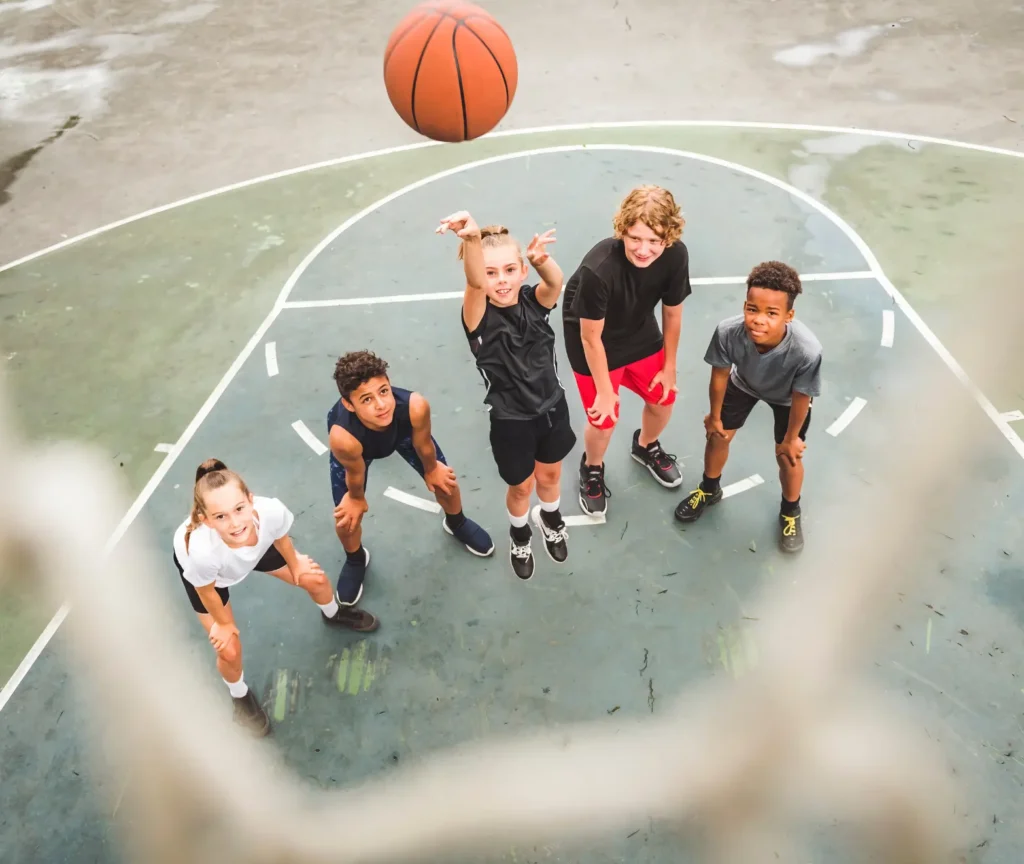
A basketball game can teach cooperation, patience and courage. It can also teach children to cheat, blame others, fear mistakes, hide weakness or believe that winning is the only thing that gives them value. A difficult activity can help a child experience growth through effort. It can also become another reminder that they are not as quick, strong or skilful as someone else.
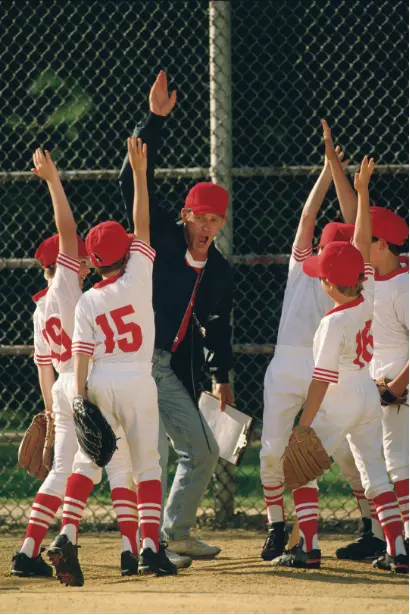
This is why we must be careful when we say that “sport builds character”. While research often indicates the developmental potential of sport2,3, and I believe deeply that it can build character, it can also build poor character if the surrounding messages reward shortcuts, belittle opponents, glorify winning at all costs, or make children feel that their worth depends on performance4. In the same way, movement can help children feel alive, capable and connected to their bodies, it can also become something they associate with punishment, shame or embarrassment if adults use it carelessly. When a child is told to do press-ups, laps or sprints because they made a mistake or gave the wrong answer, the activity is no longer only physical, but emotional.
This is why we need to look beyond whether children are simply moving. If the emotional meaning of the activity matters, then participation alone is not enough evidence that the environment is positive. It is tempting to judge physically active environments through visible outcomes. Did the children join in? Did they complete the drill? Were they active enough? Did they win? But a child can be physically present while psychologically disengaged, finishing the activity while quietly deciding that movement is “not for me”.
This is where Self-Determination Theory (SDT) becomes especially useful. It helps us look beneath the surface of participation. Did the child join in because they felt interested, capable and meaningfully involved? Or did they join in because they were afraid of being shouted at, judged, dropped from the team or embarrassed in front of others? Research by Dr Nikos Ntoumanis and Dr Martyn Standage argues that while physical education reaches large numbers of young people and can influence future physical activity, students enter P.E with different bodies, histories, abilities, interests and peer experiences. Motivation cannot be assumed simply because the subject involves movement, it must be built through the climate of the lesson.
This same point is supported by a large systematic review and meta-analysis led by Dr Daniel Vasconcellos7, which brought together findings from 265 studies. The review found that autonomous motivation was positively associated with adaptive outcomes in P.E, while external regulation and amotivation were linked with less adaptive and more maladaptive outcomes. In other words, the reason a child participates matters. The aim is not simply to get a child through today’s activity. It is to help them build a relationship with movement that lasts beyond the lesson, the match, or the adult standing in front of them7,8.
That relationship is shaped by three basic psychological needs at the heart of SDT: autonomy, competence and relatedness9. Let’s look at each of these in turn and consider what they mean for P.E and youth sport.
Autonomy: Children Need More Than Instructions to Feel Motivated
At first glance, sport seems full of autonomy. Children run, choose passes, solve game situations and respond to changing play. But many sport and P.E environments offer less ownership than we imagine. Adults often explain exactly how to move, where to stand, when to act and what counts as success before children have had much chance to explore.
This matters because autonomy is one of the most misunderstood ideas in motivation. It does not mean letting children do whatever they want. In P.E and youth sport, that would quickly become unsafe, disorganised and unhelpful. Autonomy support is not the absence of adult guidance, but it is structure with ownership.
Children still need boundaries, demonstrations, explanations and feedback. But they also need to feel that they are not just being controlled from the outside. They need opportunities to understand why an activity matters, to make some meaningful choices, to reflect on what they are noticing, and to feel that their voice has some place in the learning process. This is why autonomy-supportive teaching often includes explaining the purpose of a task, using language that invites rather than pressures, acknowledging when something feels difficult, and giving children enough time to work through the learning rather than rushing them toward compliance9.
In practice, this might mean explaining why a conditioning activity supports movement and stamina, offering pupils a choice of challenge level, asking athletes what they noticed during a practice, or allowing children to help decide roles within a game. The adult still leads, but the child is not treated as someone who must simply obey.
This distinction matters. Research using SDT within physical education, showed that when teachers became more autonomy supportive, students showed improvements in autonomous motivation, engagement, skill development and future intentions to exercise10. When designing these learning environments, the structure should help children feel ownership, meaning and possibility within movement.
Key Terms Explained
- Systematic review
A research method that carefully searches for, selects, and summarises all relevant studies on a particular question.
- Meta-analysis
A statistical method that combines results from multiple studies to identify the overall pattern or strength of the evidence.
- Autonomous motivation
Motivation that comes from interest, enjoyment, personal value, or a sense of ownership over what you are doing.
- Adaptive outcomes
Positive or helpful outcomes, such as enjoyment, engagement, confidence, learning, wellbeing, or continued participation.
- External regulation
Motivation driven mainly by outside pressure, rewards, punishments, approval, or fear of negative consequences.
- Amotivation
A lack of motivation, often when someone sees little value in the activity or feels unable to succeed.
- Maladaptive outcomes
Negative or unhelpful outcomes, such as anxiety, avoidance, disengagement, fear of failure, or reduced participation.
Competence: Confidence Grows When Children Experience Progress
In all physical activity settings coaches, teachers and parents often use several motivational phrases, “believe in yourself”, “you’re the best”, “you can do it”. As with other areas of learning, these words are usually well intentioned. They are attempts to reassure the child, to keep them involved, and to soften the fear of failure. But the feeling of being competent is not created by slogans. Children need repeated experiences of becoming more effective8.
This is especially important because competence in physically active environments is often public. A child who cannot yet catch, kick, balance, jump, run or change direction confidently may not only feel ineffective, but they may also feel visible in their ineffectiveness. Their struggle is not hidden, but happening in front of others, often while faster, stronger or more confident children move around them with ease.
This is why careful task design matters so much. Competence support is not about making everything easy. It is about helping children experience progress through appropriate challenge11. That means giving clear expectations, using helpful demonstrations, offering specific feedback, allowing enough practice time, and creating tasks where children are stretched without being humiliated. Research within SDT has shown that when students feel their basic psychological needs are supported in physical education, including competence, this can predict more autonomous motivation, enjoyment, perceived value of P.E, and intentions to take part in physical activity outside school12.
Some studies have also shown that P.E environments are dominated by peer comparison, public failure, or more competent students taking over, children’s sense of competence and belonging can be undermined13. These experiences can contribute to amotivation, reduced participation and negative emotional responses. In other words, poorly designed challenge does not make children tougher. It may simply teach them to withdraw.
A more helpful approach is to design success carefully. A child needs more intentional and personalised challenges that stretch them. When competence is built through concrete steps and experiences, confidence grows stronger.
Relatedness: Children Move Differently When They Feel They Belong
Belonging is sometimes treated as the softer side of motivation, but in both physical education and youth sport it is central. Children rarely experience these environments alone. They are grouped, paired, watched, chosen, compared, supported, teased, celebrated or ignored by others. A child’s relationship with movement can therefore be shaped as much by the social climate as by the activity itself.
This is why relatedness matters. A child may be more willing to try if they feel safe with the people around them14,8. They may take a risk, attempt a new skill, join a game, or recover from a mistake more easily when they feel they are part of the group rather than under inspection by the group. In contrast, when children feel excluded, laughed at, picked last, or constantly compared, the activity can become emotionally threatening before it has even begun.
The research captures this clearly. Studies reviewed by White and colleagues show that peer relationships are central to whether students experience PE as enjoyable or stressful13. Positive peer relationships can make PE feel fun, supportive and less intimidating, while teasing, exclusion and public comparison can undermine both motivation and participation white. This helps explain why simply putting children into teams does not automatically create belonging. A team can become a place of connection, but it can also become a place where status, confidence and ability are made painfully visible14.
Adults play a crucial role in shaping this social climate. Relatedness support is built through warmth, fairness, dependability and the sense that the adult genuinely knows and cares about the children. It is also built through practical choices, such as how groups are organised, how mistakes are responded to, how competition is framed, and whether more confident pupils are allowed to dominate4,11,14. Research using SDT has shown that teacher relatedness support can predict students’ enjoyment, confidence in the teacher, and perceptions of peer confidence15.
Belonging should not be left to chance. If we want children to develop a healthy relationship with movement, they need to feel that there is a place for them in the activity. Not only if they are fast, skilful, or help the team win. They need to feel that movement is something they can share with others.
What adults can do differently
Explain the purpose
Build Real Competence
Offer ownership within structure
Make feedback useful
Design belonging
Final Thoughts

Participation in physical education and youth sport can do something remarkable. It can help children discover that their bodies are not objects to be judged, hidden or compared, but instruments for exploring the world. Through movement, children can learn to take risks, recover from mistakes, trust effort, cooperate with others, and carry more energy into the rest of life. But these lessons are not built by simply participating. They are built by the climate surrounding it.
This is why the role of all adults matters so much. A teacher, coach or parent may not remember every instruction they gave, every drill they planned, or every score from the game. But children often remember how movement made them feel. Did they feel capable? Did they feel included? Did they feel safe enough to try? Did they feel that effort helped them grow? When we support autonomy, competence and relatedness, we give children something far more important than a single positive lesson or successful session. We help them build a relationship with movement that can last.
Until next time, stay curious
Dr Will Zoppellini
Another cup of theory? Discover more...


Download the practical strategies from this post as a free printable infographic
*By signing up, you agree to receive emails from Coffee & Theory. You can unsubscribe at any time.

References
- Ryan, R.M, Williams. G.C, Patrick, H, Deci. E.L. 2009. Self-determination theory and physical activity.Hellenic journal of psychology, 6(2), pp.107-124.
- Balyi, I., Way, R. and Higgs, C. 2013.Long-term athlete development. Human Kinetics.
- Burton, D., 2008. Sport Psychology for Coaches.Human Kinetics.
- Vealey, R.S. and Chase, M.A. 2016.Best practice for youth sport. Human Kinetics.
- Ntoumanis, N. and Standage, M. 2009. Motivation in physical education classes: A self-determination theory perspective.Theory and research in Education, 7(2), pp.194-202.
- Vasconcellos, D., Parker, P.D., Hilland, T., Cinelli, R., Owen, K.B., Kapsal, N., Lee, J., Antczak, D., Ntoumanis, N., Ryan, R.M. and Lonsdale, C. 2020 ‘Self-Determination Theory applied to physical education: A systematic review and meta-analysis’, Journal of Educational Psychology, 112(7), pp. 1444–1469.
- Ng, J.Y.Y., Ntoumanis, N., Thøgersen-Ntoumani, C., Deci, E.L., Ryan, R.M., Duda, J.L. and Williams, G.C. 2012 ‘Self-Determination Theory applied to health contexts: A meta-analysis’, Perspectives on Psychological Science, 7(4), pp. 325–340.
- Ryan, R.M. and Deci, E.L. 2017 Self-Determination Theory: Basic psychological needs in motivation, development, and wellness. New York: Guilford Press.
- Reeve, J. 2009. Why teachers adopt a controlling motivating style toward students and how they can become more autonomy supportive.Educational psychologist, 44(3), pp.159-175.
- Cheon, S.H., Reeve, J. and Moon, I.S. 2012 ‘Experimentally based, longitudinally designed, teacher-focused intervention to help physical education teachers be more autonomy supportive toward their students’, Journal of Sport & Exercise Psychology, 34(3), pp. 365–396.