

When Rewards Create Engagement, But Not Learning
1 May, 2026

Author Dr Will Zoppellini
There is a small kind of magic in the moment a child first discovers that books contain new worlds. One minute, the page is only paper. The next, it is a forest, a football pitch, a secret door, a dragon’s cave, a letter from someone far away. A child leans in, not because someone has told them to, but because the story has begun to pull them. Their eyes move. Their fingers trace the line. They ask, “What happens next?”… and for a moment, reading is not a task. It is a doorway.
But then, somewhere along the way, we place a sticker chart beside the door.
Read one book, get a sticker. Read five books, get a certificate. Read ten books, choose from the prize box. The child still reads. In fact, they may read more than before. The adult sees the chart filling up and feels reassured. Something is working. The child is engaged.
But engaged in what?
Are they becoming more interested in stories, ideas, language, and meaning? Are they learning to stay with difficulty, wonder about characters, ask questions, make connections, and enjoy the strange work of thinking? Or are they learning that reading is something we do to earn something else?
This is one of the quiet problems in how we often think about motivation. Many of the things we call rewards for learning are not really rewards for learning at all. They are rewards for visible engagement. Sitting still. Finishing the page. Completing the worksheet. Turning up to training. Getting the homework done. These things matter, of course children need to participate and practise. But passive engagement is not the same as learning, and compliance is not the same as motivation.
Table of Contents
Self-Determination Theory gives us a way to look beneath the behaviour and ask a better question. Instead of “How do we get children to do more?” we could ponder “What kind of motivation for learning are we helping them build?” In this post, I’ll explore why rewards, punishments, pressure, and constant evaluation can sometimes backfire, even when they appear to work on the surface. I’ll examine how educators of all backgrounds and contexts can support autonomy without losing structure, and why the goal is not to make every task fun, but to help children understand, value, and gradually take ownership of their learning.
It’s time to turn the coffee machine on, find some space, and be curious.
When Rewards Create Engagement, But Not Learning

As educators or parents, rewards are attractive because they are simple. They give us a clear button to push, do this and you get that. In the short term, this can, and often does, produce results. A child may read more books to earn a certificate, complete more equations to gain points, or work harder in sport training to win a prize. The difficulty is that rewards can change the meaning of the activity. Instead of experiencing reading, writing, learning, or practising as valuable in itself, the child begins to experience the activity as a means to an external end1.
This is where the distinction between passive engagement and learning matters. A child can be engaged in earning a sticker without becoming more interested in reading. A student can be engaged in finishing a task without understanding the idea behind it. A young athlete can be engaged in a practice without becoming more willing to experiment, take risks, or learn from mistakes.
This does not mean all rewards are harmful in every situation2. Self-Determination Theory (SDT) is more nuanced than that. The issue is whether the reward is experienced as informational or controlling3. Feedback or recognition that acknowledges effort, progress, strategy, or improvement can support a child’s sense of competence. But rewards used to pressure, manipulate, or secure compliance can undermine autonomy. Across several studies researchers Christopher Niemiec and Richard Ryan argue that educators often introduce external controls into learning climates with good intentions, but these controls can stifle the volitional processes involved in high-quality learning3.
Richard Ryan, one of the founders of SDT, clarified this point further by explaining that external regulation (i.e external rewards) can be powerful, and can get behaviour moving. But it is often unsustainable. If children are acting mainly to gain the reward or avoid the consequence, adults have to keep supplying the pressure. Over time, the reward may need to become bigger, the punishment sharper, or the reminder more constant. Even then, the learner may do only the minimum required to get the reward or escape the consequence4.
Key Terms Explained
- Volition
The act of deciding upon and initiating a course of action, often involving goal-oriented behaviour and the exercise of executive abilities that create a sense of personal choice and agency
Pressure works in a similar way. “Come on, you can do better.” “You’re better than this.” “We need to win.” These phrases may sound encouraging, especially when educators care deeply. But pressure often narrows attention toward approval, comparison, or avoiding failure. In classrooms, children may focus on grades, public comparison, or not looking foolish6. In sport, young athletes may become tense, cautious, and afraid to experiment. At home, homework may become less about learning and more about surviving the evening7.
The common thread here is control. In each case, the learner may still be doing the task, but they are increasingly doing it because something outside them is pushing, pulling, judging, or rewarding the behaviour. SDT suggests that this matters because learning is not only shaped by what children do, but by how they experience themselves while doing it. Do they feel pressured through the task, or do they feel some sense of ownership, meaning, and involvement in it? Previously, I explained that a key aspect of motivation is having a sense of autonomy, which within learning is the need to feel “behind” our actions. As several authors highlight, it is to feel that what we do is self-endorsed rather than imposed or forced2,6.

A child may not love practising spellings. A young musician may not enjoy scales. A footballer may not always enjoy repetitive passing drills. But if they come to see why the activity matters, their motivation changes in quality. The key point here is children will do things they do not want to do if they know it helps them in something they want to learn. Doing the task because they are afraid of the consequence is compliance and passive engagement, not motivation for learning. So, the question is not simply “How do we get children to do the task?” The better question is “what are they learning about the task while they do it?”
Autonomy Support Is Teachable
If the problem is not the task itself, but the child feeling controlled by the task, then autonomy-supportive teaching becomes especially important. I’ve had the privilege of witnessing autonomy-supportive teaching in action across a range of contexts. I’ve witnessed it in classrooms where students felt truly heard, in community groups where young people’s ideas mattered, and on sports fields where coaches fostered ownership of growth. Coupled with this, is a significant amount of robust evidence that this is teachable. Let’s break down some key consistent aspects of this approach.
One of the clearest starting points is to take the learner’s perspective7. Before adding another reward or increasing pressure, we can ask “what is this child experiencing right now?” Giving us more perspective if the task feels pointless, too hard, too easy, embarrassing, if they understand what success might look like, if they are bored, overwhelmed, disconnected, or afraid of failing.
In practice, perspective-taking is not about asking token questions, but rather about genuinely seeking to understand the learner’s experience. Research shows that when adults seek out what learners are feeling, whether it’s confusion, disconnection, or uncertainty about success, those learners feel heard. This process equips educators to support learners meaningfully.
A good example of how this is translated into practice comes from a study completed by Reeve and Cheon8. In their randomised controlled trial, teachers underwent autonomy-supportive training. First, they honed their perspective-taking skills, seeking out what students felt about tasks. From there, teachers provided clearer rationales, reduced controlling practices, and supported students’ interests. The results showed that students experienced more need satisfaction and less frustration. This aligns with the understanding that autonomy support isn’t abstract, it’s practical, measurable, and it can work.

Autonomy support also means giving meaningful rationales. A rationale is not a threat dressed up as an explanation. For example, “Do this because it is on the test” is not the same as helping a child see why something matters. A better rationale connects the activity to meaning, usefulness, growth, contribution, or future possibility. This could be as simple as explaining that practising a specific way of passing a ball gives you more options when the game gets fast. Or that, “writing clearly helps other people understand the argument in your head.”
Autonomy support is therefore not about stepping back entirely. It is about stepping in differently and listening first, explaining clearly, reducing unnecessary pressure, and helping children feel that learning is something they can gradually stand behind. The practical message is not that adults should stop guiding children. It is that guidance works better when children are treated as meaning-making people, not behaviour-management problems.
Why Structure Is Vital
A common misunderstanding of autonomy supportive teaching is that it means letting children do whatever they want. It does not. Autonomy is not the absence of guidance, boundaries, modelling, expectations, or feedback3. This is why autonomy support works best alongside structure and involvement. Children need educators or parents who are warm enough to listen and offer the structure to help, otherwise they may feel abandoned or overwhelmed. The sweet spot is guidance that helps children feel capable, connected, and involved in the learning process, rather than managed9.
Guay and colleagues’ CASIS framework7 is useful because it shows what this can look like in real classrooms. CASIS stands for Collaboration, Autonomy-Support, Structure, Involvement, and Significant Activities. In their 2020 study, the researchers evaluated a professional development programme designed to help teachers support elementary students’ motivation to write. The programme focused on practices such as considering students’ perspectives, giving rationales, acknowledging feelings, offering information and choice, setting clear expectations, providing appropriate challenge and feedback, creating meaningful activities, and supporting collaboration.
This matters because writing, like many learning tasks, is not always instantly enjoyable. It can be effortful, messy, and exposing. A child may have ideas but struggle to organise them. Another may know what they want to say but fear spelling mistakes. Structure helps by making the path visible such as outlining the purpose, steps, what success could look like, and offering feedback that helps a child continue. Autonomy support helps make the path feel meaningful by validating ideas, frustration, and showing that the task has a purpose beyond pleasing you the adult.
This brings us back to the central point of motivation within this post. Motivation is not simply about getting children to do or produce more. It is about the quality of the energy behind what they do. From the outside, two children may look identical. Both complete the work. Both behave. Both hand something in. But one may be thinking, “This is helping me get better,” while the other is thinking, “If I do this, I’ll get another sticker.” The behaviour looks similar, but internal experience is completely different.
That difference matters because learning asks children to stay with difficulty, risk mistakes, tolerate uncertainty, receive feedback, and try again9. Controlled motivation may get the task finished. Autonomous motivation, supported by clear structure, is more likely to help the child grow through it.
Final Thoughts

If we want children to become independent learners, thoughtful athletes, curious readers, confident writers, or resilient problem-solvers, we need to rethink what we mean by motivation. The goal is not simply to get children to do more, finish faster, or look engaged from the outside. The deeper goal is to help them understand why learning matters, feel capable of growing through difficulty, and gradually take ownership of the process. Rewards and pressure may move behaviour in the short term, but autonomy-supportive teaching helps build something more lasting, learners who are not just completing tasks for approval but beginning to stand behind their own learning.
Until next time, stay curious
Dr Will Zoppellini
Another cup of theory? Discover more...


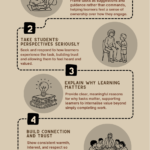
Download the practical strategies from this post as a free printable infographic
*By signing up, you agree to receive emails from Coffee & Theory. You can unsubscribe at any time.

References
- Gagné, M. 2015. The Oxford handbook of work engagement, motivation, and self-determination theory. New York, New York: Oxford University Press
- Ryan, R. M., & Deci, E. L. 2017. Self-determination theory: Basic psychological needs in motivation, development, and wellness. Guilford Press.
- Niemiec, C. P., & Ryan, R. M. 2009. Autonomy, competence, and relatedness in the classroom: Applying Self-Determination Theory to educational practice. Theory and Research in Education, 7(2), 133–144.
- Ryan, R.M. and Deci, E.L. 2020. Intrinsic and extrinsic motivation from a self-determination theory perspective.Contemporary Educational Psychology, 61(1).
- Ryan, R. M., & Deci, E. L. 2000. Intrinsic and extrinsic motivations: Classic definitions and new directions. Contemporary Educational Psychology, 25(1), 54–67.
- Guay, F. 2022. Applying self-determination theory to education: Regulations types, psychological needs, and autonomy supporting behaviors.Canadian Journal of School Psychology, 37(1), pp.75-92.
- Guay, F., Gilbert, W., Falardeau, É., Bradet, R., & Boulet, J. 2020. Fostering the use of pedagogical practices among teachers to support elementary students’ motivation to write. Contemporary Educational Psychology, 63, 101922.
- Reeve, J., & Cheon, S. H. 2024. Learning how to become an autonomy-supportive teacher begins with perspective taking: A randomized control trial and model test. Teaching and Teacher Education, 148, 104702.
- Guay, F. 2022. Applying self-determination theory to education: Regulations types, psychological needs, and autonomy supporting behaviors.Canadian Journal of School Psychology, 37(1), pp.75-92.